


Solar panel maintenance versus cleaning
A dirty panel is easy to spot. A loose connection, a weak inverter, or a defective solar panel usually isn’t. Anyone searching for “solar panel maintenance versus cleaning” rightly wants to know which service is actually necessary. Cleaning can improve yield when dirt blocks the light. Maintenance goes further: it checks whether your entire installation continues to operate safely, reliably, and profitably.
For maximum energy yield, you often need both, but not always at the same time. The right choice depends on the level of soiling, the age of the installation, your yield data, and the condition of the components.
What is the difference between maintenance and cleaning of solar panels?
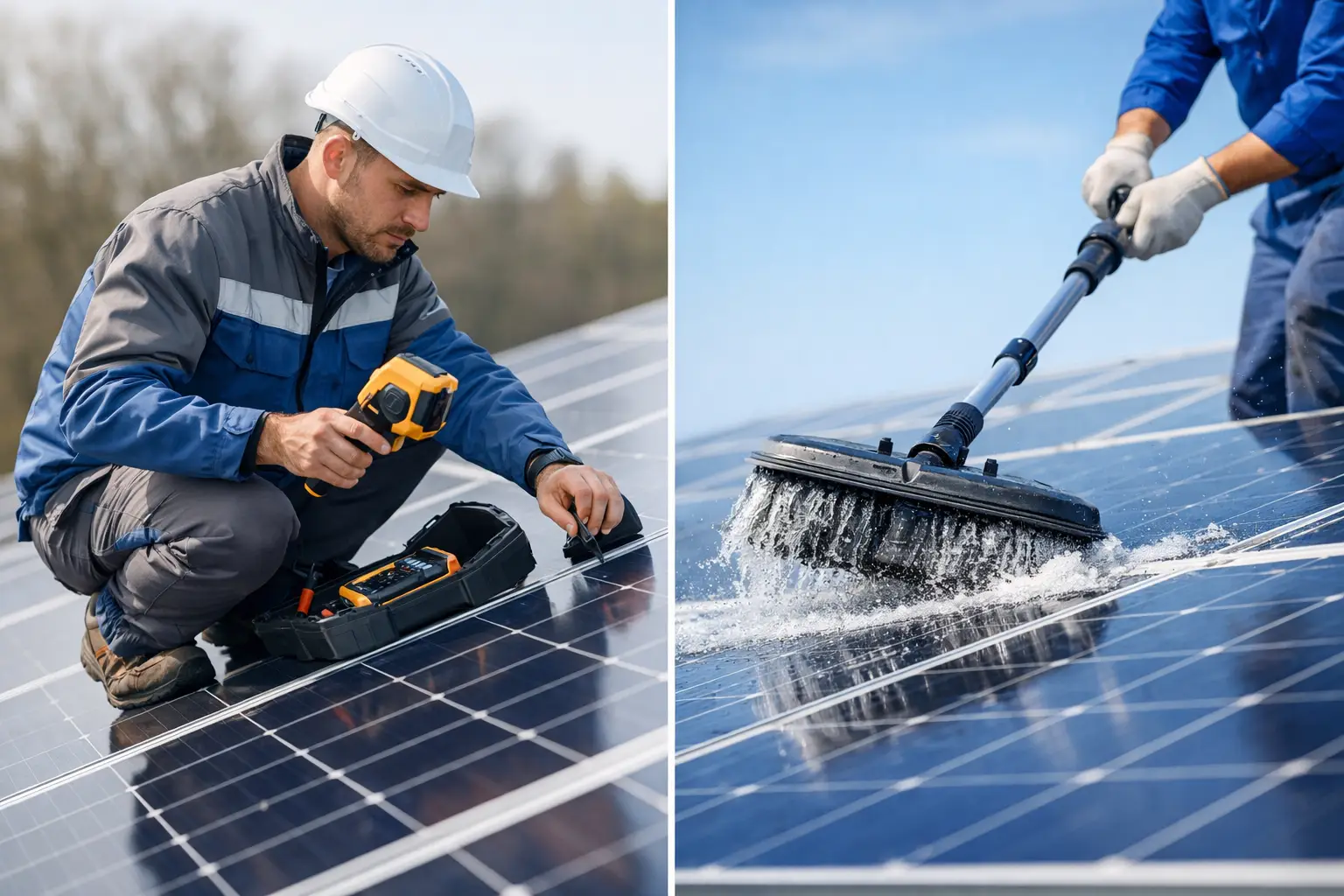
Cleaning focuses on the surface of the panels. Dust, pollen, soot, bird droppings, leaves, and residue can partially block sunlight. Professional cleaning removes this dirt carefully, without scratches, aggressive agents, or damage to the panels.
Maintenance is a technical inspection of the entire installation. This involves looking not only at the panels but also at the inverter, cabling, connectors, mounting, safety systems, and any monitoring. The goal is to prevent malfunctions, identify risks in time, and limit unnecessary loss of yield.
The difference is simple: cleaning helps when dirt hinders your production. Maintenance helps when wear, defects, or safety risks could slow down or shut down your installation. A clean system is not automatically a technically healthy system.
When is solar panel cleaning useful?
Rain washes away loose dust to some extent, but it does not remove stubborn dirt. Think of bird droppings, soot deposits, sticky pollen, or dirt edges along the bottom of the panel. Panels can get dirty faster, especially in areas with many trees, agricultural activities, traffic, industry, or birds.
A low tilt angle also plays a role. Water drains less easily, and dirt accumulates more readily. Furthermore, in large installations, localized soiling can go unnoticed even though it affects an entire string of panels.
Cleaning is particularly interesting if you see clear soiling and your yield is lower than expected based on the season and previous years. If in doubt, have the situation assessed first. Not every low yield figure is caused by dirt. Shadows, a malfunction, an error message, or a defective component can create the same impression.
Going up on the roof yourself with a brush, high-pressure cleaner, or cleaning agent is rarely wise. You run the risk of falling, can cause micro-damage, and don’t always know if you are working safely around the cabling. Professional cleaning is carried out with suitable equipment and attention to the condition of the installation.
What does technical maintenance check?
Technical maintenance looks for problems that you usually don’t see yourself. For example, a technician checks whether panels are still correctly secured, whether cables and connectors are intact, and whether there are signs of wear, moisture, damage, or overheating. The operation of the inverter and the electrical protection also deserve attention.
During an inspection, signs that could lead to failure in the long term are also examined. Think of loose cables, damage by animals, early-stage corrosion, or an inverter that is underperforming. Early intervention is generally easier and cheaper than waiting until an installation fails completely.
For households, maintenance primarily provides peace of mind. You have a better idea of whether your investment is doing what it should. For companies, it is even more directly linked to continuity. A malfunction on a large roof can cost days of income if no one notices the discrepancy quickly.
A technical inspection is also the right time to ask questions about the expected lifespan of components, warranties, and possible improvements. Especially if your original installer is no longer active, an independent check is valuable.
Solar panel maintenance versus cleaning: what do you need?
Don’t start with the assumption that cleaning will solve the problem. First, look at what your installation is telling you. Compare your yield with the same period last year, but take weather and sunshine hours into account. A difference after an exceptionally gloomy month says little. However, a persistent, unexplained drop deserves attention.
Do you see mainly visible soiling while the installation is otherwise working normally? Then cleaning may be appropriate. Do you see error messages, is the inverter not working properly, has production dropped abruptly, or do you have doubts about safety? Then choose maintenance or technical assistance first.
In some situations, a combination makes sense. During a maintenance visit, it may turn out that soiling explains part of the yield loss, alongside factors like shading or a technical point of concern. By correctly distinguishing the cause, you only pay for work that truly contributes to your return.
Monitoring makes the difference visible
Without figures, it’s often just guesswork. With monitoring, you can see more quickly if your installation deviates from the expected pattern. A sudden drop can indicate a malfunction. A gradual decline may be consistent with soiling, shadow growth, or wear.
Monitoring does not replace an inspection, but it does help you take action at the right time. You prevent a problem from going unnoticed for months. For owners who don’t want to check the inverter every day, this primarily provides certainty and less worry.
Solar Assistance monitors more than 10,000 installations and combines that data with technical expertise on-site. This ensures that an intervention is based on the actual performance of your installation, not just a visual impression.
How often should you have cleaning or maintenance done?
There is no fixed frequency that is right for every roof. A home in a quiet, open environment with sufficient rain may need cleaning less often than a home under trees or near a busy road. Birds also make a big difference. Nesting and bird droppings not only cause dirt but can also damage cables and components.
The same principle applies to technical inspections. A new installation without discrepancies requires something different than an older system, an installation with previous malfunctions, or a roof where animals are active. Preventive maintenance works best when it aligns with the age, setup, and performance of your installation.
A practical approach is to have your yield monitored continuously and to plan at least periodic professional assessments. After severe weather, work on the roof, damage, or an error message, it’s better not to wait for the next scheduled time. A quick check prevents a small problem from becoming a larger one.
Watch for these signs
These situations are a good reason to call in a specialist:
- Your yield is noticeably lagging without a clear explanation.
- The inverter shows a warning, error code, or is frequently off.
- You see stubborn dirt, bird droppings, moss, or leaves on the panels.
- Cables, panels, or mountings appear damaged or loose.
- Your installation is older, your installer is no longer reachable, or you don’t know the technical condition.
Don’t wait for the annual statement to discover that your system has produced less. The sooner you spot discrepancies, the greater the chance of a limited intervention and less downtime.
Protecting yield without unnecessary costs
Good management isn’t about cleaning or inspecting as often as possible. It’s about the right action at the right time. Clean where dirt hinders production. Maintain where technology, safety, and reliability require attention. Use yield data to support that decision.
That is also the most sensible way to control costs. A preventive check can help avoid a major repair. Targeted cleaning prevents you from paying for work that has no demonstrable effect. This way, you protect both the energy yield and the lifespan of your installation.
Do you see a discrepancy in your production or do you have doubts about the condition of your panels? First, have it determined what is actually going on. A clear diagnosis gives you the certainty to act purposefully and let your solar panels do what you installed them for: generating reliable energy.