



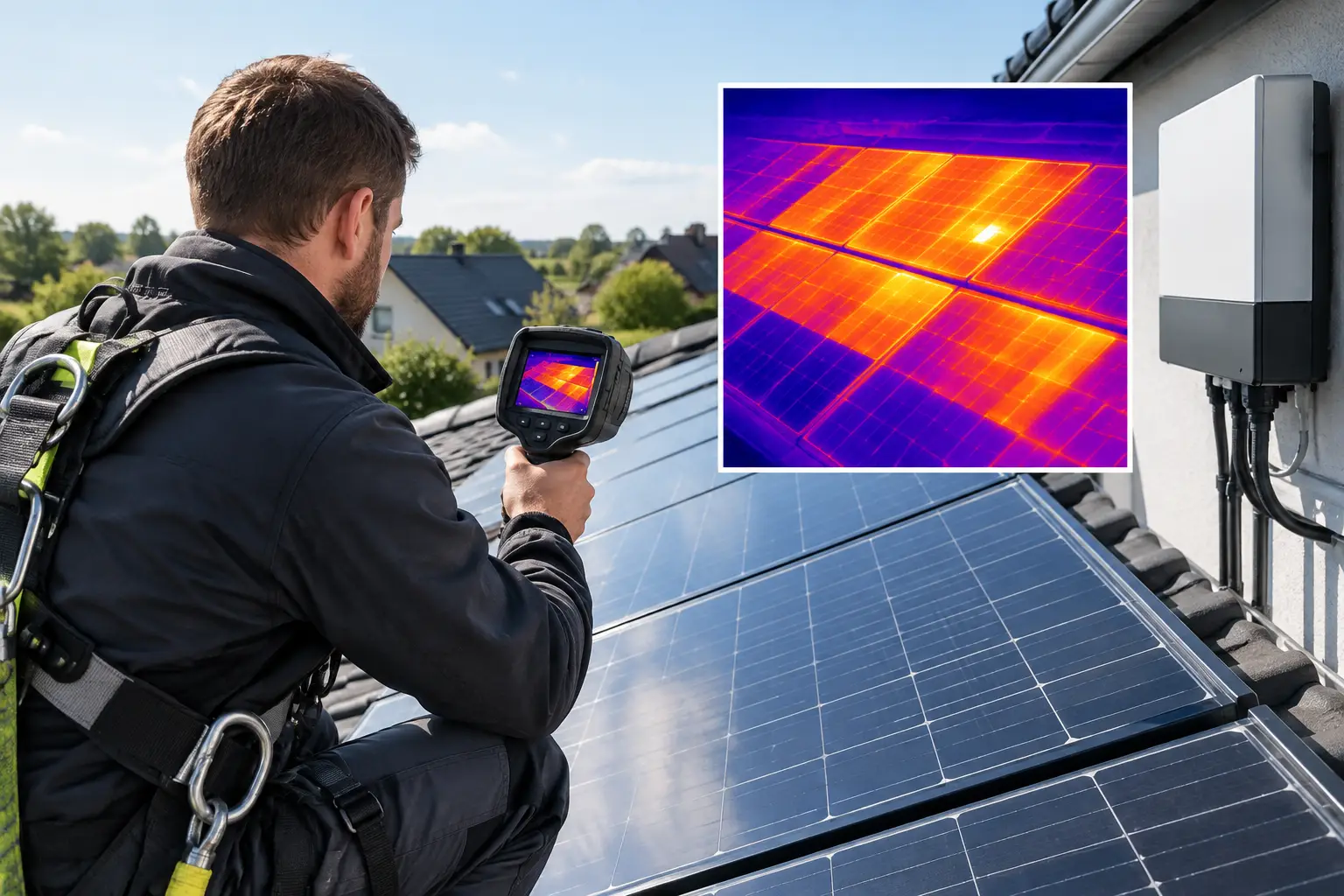
Thermography versus visual inspection explained
A panel can look perfect from the ground and still produce less power. That is why thermography versus visual inspection is not a choice between two competing checks. Both methods look for different problems. A visual inspection shows what you can see. Thermography uses a thermal imaging camera to make temperature differences visible that remain hidden to the naked eye.
For owners of solar panels, this difference is relevant when the yield is disappointing, you receive an error code on the inverter, or your installation has not been technically checked for years. The inverter is the device that converts the power from your panels into usable electricity. If a defect in a panel, connection, or cable goes unnoticed, your yield can quietly decline.
What a visual inspection of solar panels shows
During a visual inspection, a technician looks specifically at the visible condition of the installation. This starts not only with the panels themselves, but also with the cabling, connectors, mounting, and inverter. A good check is therefore more than just a quick look at the roof.
Cracks in glass, discoloration, loose clamps, damaged cables, and dirt are often visible. Bird nests under the panels can also be noticeable. These can hinder ventilation, damage cables, and cause dirt to accumulate. If panels become partially shaded by dirt, leaves, or growth, you usually see this during this check as well.
The technician also checks for signs of moisture, wear, or damage to connections. Connectors that are not correctly secured or cables rubbing against a sharp edge under tension can cause a malfunction later. As an owner, you often don’t notice anything until the inverter shuts down or production drops.
A visual inspection is particularly useful after storm damage, roof work, a renovation, or a report of a problem with your solar panels. It quickly provides clarity on defects that are visible and accessible. But it does not always tell you if each panel is still functioning well internally.
What you don’t always see
A solar panel consists of individual solar cells. Internal damage, a poor contact in a junction box, or a cell that gets too hot does not necessarily leave visible traces on the glass. Yet such a problem can affect the production of an entire part of the installation.
Even with a string—a series of panels connected together to the inverter—one weak panel can suppress performance. From a distance, everything seems normal: nothing is loose and the glass is intact. The cause only becomes clear when you also look at electrical values, monitoring, or thermal images.
Thermography versus visual inspection: the real difference
Thermography is an investigation using a thermal imaging camera. This camera does not measure power production but makes temperature differences visible. A panel that is locally much warmer than the rest can indicate a problem. Technicians sometimes call such a warm zone a hotspot.
A hotspot can be caused by a damaged solar cell, a poor contact, shadow, or dirt. The thermal image is an indication, not an automatic final conclusion. The technician must always assess the cause and whether further investigation is needed. For example, a temporary shadow from a chimney or a leaf can also cause a temperature difference.
In thermography versus visual inspection, the difference lies in the depth. Visual research answers the question: is something wrong on the outside? Thermography helps with the question: is a panel, connection, or cable behaving abnormally while the installation is working?
This makes thermography particularly valuable when hidden defects are suspected. Think of an installation where the yield seems lower than expected without a clear error message. Or panels that look good but where monitoring shows deviating performance.
A thermal image is only reliable in the right conditions
Thermography does not just work at any time. Panels must be sufficiently loaded by sunlight so that potential temperature differences become visible. The weather, the position of the sun, shadow, and the state of the installation also play a role in the interpretation.
Replacing a thermal imaging camera with a quick glance makes little sense. Conversely, thermography without a visual check also has limitations. For example, a thermal image does not always tell you why a connection is damaged or if a mounting is loose. That is why both checks complement each other.
When is each check recommended?
After a visible incident, a visual inspection is often the logical first step. If a branch has hit panels, there has been roof work, or you see damage to cabling, a technician must assess the physical condition. Going onto the roof yourself or working on cables and the inverter is not a good idea. Solar panels still contain electrical components, even when the inverter is not producing.
In the event of an unexplained drop in yield, monitoring is often the first clue. Monitoring tracks the performance of your installation remotely. If you see a deviation, a technician can determine whether a visual check, measurements, or thermography are necessary. This prevents investigating without a clear question.
Thermography is especially recommended when a visible problem is absent, but performance or electrical measurements give cause for further investigation. This can also be useful for older installations, especially if no technical check has been carried out for a long time. A malfunction goes unnoticed for an average of seven months. Without follow-up, a small defect can cost yield for a long time.
In the case of heavy dirt or clear shading, a thermal image will not always be the first solution. First, the cause must be addressed. Dirt on panels can affect yield, but uneven dirt can also cause temperature differences. An inspection helps to distinguish between necessary maintenance and a technical defect.
Why one check rarely provides the full answer
Those who only look at the appearance can miss hidden defects. Those who only look at a thermal image can misjudge visible causes or temporary circumstances. A technician therefore combines what he sees with the data from the inverter and, where available, the monitoring.
Suppose one part of your installation produces less. Visually, it may appear that shadow from new growth is falling on it. If the panels are free of shadow and damage, but the deviation persists, thermography can help look for a warm panel or poor connection. After that, targeted measurements are needed to decide whether a part needs to be repaired or replaced.
This approach is also more reassuring than immediately assuming a major defect. Not every deviation requires the same intervention. Sometimes the cause is dirt or shadow. Sometimes it’s a communication problem in the monitoring. Sometimes there is indeed a technical flaw that requires quick attention.
What do you do if you have doubts about the yield?
Don’t just compare with an exceptionally sunny month from the past. Look for recurring deviations, error codes on the inverter, and differences between parts of the installation. Also note when you first noticed the deviation. This helps the technician to search more specifically.
If you do not have active monitoring, a technical check can be extra valuable. Solar Assistance monitors more than 10,000 installations and has been working on existing solar installations throughout Belgium since 2012. In the event of an urgent malfunction, we can be on-site within 48 hours. Our technicians assess which check is really necessary and clearly indicate what they find.
FAQ
Is thermography always necessary for solar panels?
No. In the case of visible damage, dirt, or a clear problem with the cabling, a visual inspection is often the right start. Thermography is mainly useful when there is a suspicion of a hidden defect or a deviation that is not immediately visible.
Can thermography prove a defect with certainty?
Not on its own. Thermography shows abnormal temperature differences. The technician uses this information together with a visual check, measurements, and data from the inverter to correctly determine the cause.
My inverter is not showing an error code. Can something still be wrong?
Yes. An installation can still produce while a panel or part of a string is not working as well. Monitoring and a targeted technical check help to notice such deviations earlier.
Do you notice a lasting drop in yield, an error code, or damage to your installation? Then contact us via 02 828 90 01 or the contact form, so that a technician can determine whether a visual inspection, thermography, or another check is necessary.