


Best measures against hotspot problems
A solar panel can look perfect from the ground and yet become far too hot locally. That is exactly why the best measures against hotspot problems do not start with guessing, but with targeted checking. A hotspot costs yield, can accelerate damage to a panel, and often goes unnoticed until the output drops noticeably.
A hotspot is a small part of a solar panel that becomes warmer than the rest. Usually, it involves a solar cell that can pass through less current than the other cells. That cell then no longer just produces energy, but also absorbs energy and converts it into heat. With sufficient sun, the temperature difference can become large. This deserves prompt attention, especially if your installation has been in service for years or you want to protect your yield.
Best measures against hotspot problems: find the cause first
A hotspot is a symptom, not a diagnosis. Simply replacing a panel without knowing what is causing the local heating can therefore cost money without solving the real problem. A professional check first maps out which panels, cells, and components deviate.
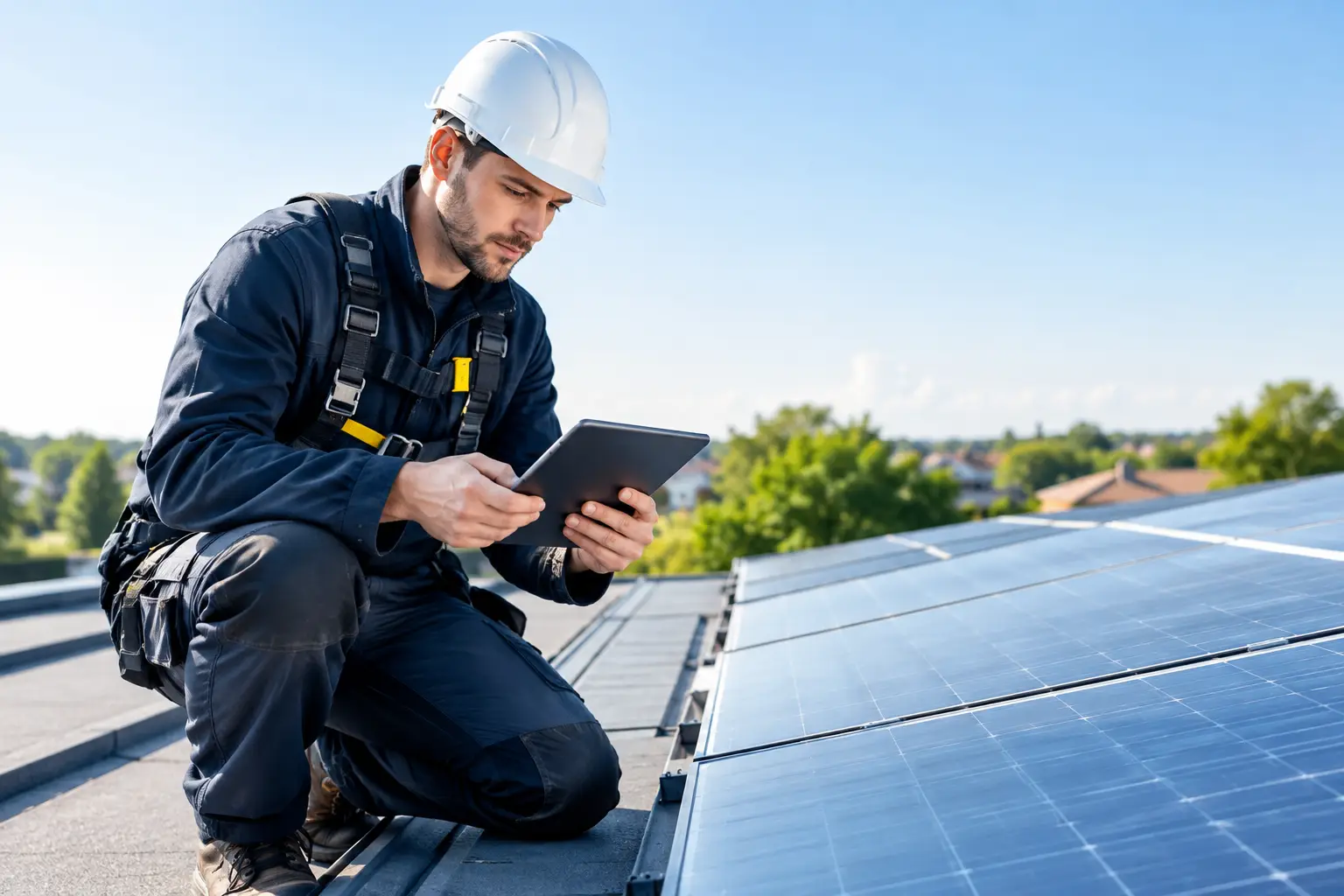
A thermographic inspection is particularly useful for this. With a thermal imaging camera, temperature differences become visible while the installation is producing power. This allows a technician to see if it really is a hotspot, where it is located, and if multiple panels show the same pattern. This is best done under suitable solar irradiance and safe conditions.
The yield data provides extra context. Does one string structurally produce less than a comparable string? Is there a sudden drop after a period of work on the roof, storm damage, or increasing contamination? Then further investigation is logical. With good monitoring, you notice deviations earlier, often before you notice them yourself on your energy bill.
Also note an important difference: not every warm spot is immediately a serious defect. Limited heating at a junction box or a temporary difference due to shadow requires a different approach than a damaged cell. The severity depends on the temperature, the cause, the age of the panel, and the influence on production. That is why measuring is better than assuming.
What causes are at the root?
Local shadow is a common cause. Think of a chimney, dormer, tree branch, antenna, or leaves that cover only part of a panel. Bird droppings can also cover one or a few cells. When this happens regularly, that small zone can become much warmer than the rest of the panel.
Dirt mainly plays a role when it accumulates locally. A uniform layer of dust usually slightly lowers the yield of the entire panel. A stubborn stain, moss edge, pile of leaves, or droppings in one place can cause a greater local load. Targeted and safe cleaning can then help, but it is not a solution for an internal cell defect.
Micro-cracks in solar cells are a second major cause. Such small fractures can occur due to transport, incorrect installation, roof work, hail, or mechanical stress. They are not always visible to the naked eye. Under load, the electrical connection in a cell can deteriorate, resulting in heat development and yield loss.
A defective bypass diode, loose connector, poor connection, or problem in the cabling can also cause heat. That is a reason not to work on plugs, cables, or the inverter yourself. Direct current from solar panels remains present as soon as light falls on the panels. A safe diagnosis requires the right measuring equipment and a technician who knows what to look for.
How to limit damage and production loss
The first measure is simple: do not let a suspected hotspot linger for months. Do you see a clear drop in yield, an error message from the inverter, or visible contamination that keeps coming back? Then plan an inspection. The sooner the cause is known, the smaller the chance of permanent damage and unnecessary downtime.
Repair only what is actually defective
A targeted choice follows the diagnosis. In the case of temporary shadow, pruning or removing an obstacle may be sufficient. In the case of recurring contamination, cleaning is recommended. In the case of damage to a panel, diode, or connection, repair or replacement is often the right step.
Replacing a panel is not always automatically the best solution. Is the panel still available and does it match the existing installation electrically? Are multiple panels from the same series affected? Can a repair safely fix the problem? With older installations, it may be more interesting to look more broadly at the configuration and future yield. The right decision takes into account cost, yield loss, and remaining lifespan.
Reduce recurring local contamination
If droppings or nesting material regularly cause problems, it is better to tackle the cause rather than just the consequences. Bird deterrents can prevent birds from nesting under the panels and dirt from continuing to pile up in the same places. This not only protects production but also helps prevent damage to cabling and roof construction.
Cleaning also requires a well-thought-out approach. Do not use abrasive materials, aggressive products, or high pressure. These can damage glass, seals, or frames. Moreover, working on a roof without the right safety equipment is not a good idea. Have the panels cleaned when the contamination has a demonstrable influence or when an inspection recommends it.
Check the installation as a whole
A hotspot in one panel can affect the result of an entire string. That is why a good check looks further than the conspicuous panel. The cabling, connectors, inverter values, mounting, and condition of the other panels also deserve attention.
This also applies after external events. After heavy hail, storms, roof work, or activities near the installation, a visual and technical check is wise. Otherwise, small damages only stand out when performance drops further. Preventive maintenance gives you clarity on the technical state of your installation sooner and prevents small deviations from growing into a more expensive intervention.
Monitoring makes the difference between noticing and missing
Those who only occasionally look at the inverter usually only see that something is wrong when the problem has existed for some time. Monitoring compares production data over time. A deviating pattern can indicate shadow, contamination, a defective panel, or a malfunction in a component of the installation.
Monitoring does not tell you the exact cause by itself. Less production can, for example, also be related to the weather, seasonal influences, or a general grid interruption. The value lies in the combination: reliable data, a clear warning, and targeted technical follow-up. This way, a potential hotspot does not become a surprise at the end of the year.
For larger installations, this is even more important. A limited deviation per panel can mean a significant loss at a business level. Regular reporting and rapid intervention help to safeguard the continuity of production. For families, the same approach primarily provides peace of mind: you don’t have to constantly check yourself whether everything is still working as it should.
What you should and should not do yourself
You can safely observe a few things yourself. Check from the ground whether there is permanent shadow, whether branches are growing over the installation, and whether there are remarkably many leaves or bird droppings on one zone. Also regularly check the production in your inverter app, especially when it clearly deviates from previous years in similar weather.
Do not go on the roof yourself to dismantle panels, disconnect cables, or measure temperatures. A hotspot is not always visible, and errors in DC connections can be dangerous. Even a panel that at first glance only seems dirty can be internally damaged. Therefore, have any doubts assessed by a professional.
Note when you first saw the deviation, take photos of visible shadow or contamination, and keep track of any error messages. This information helps a technician to determine more quickly which check is needed. This shortens the intervention time and limits unnecessary costs.
Prevention is more profitable than waiting
The best protection against hotspots is a combination of periodic checks, good follow-up of yield data, and acting quickly in case of deviations. Especially installations that are getting older, are difficult to reach, or regularly suffer from birds, shadow, or dirt benefit from a fixed maintenance routine.
Solar Assistance views solar installations with one goal: maximum energy yield with as little worry as possible. A timely inspection can clarify whether there really is a hotspot, what measure is needed, and how you can limit recurrence. This way, your installation continues to produce as intended, even when a small problem does not immediately show itself.