


Main risks with old solar panels
An installation that is ten, fifteen, or twenty years old can still produce a decent amount of power. However, the main risks with old solar panels are often not visible from the ground. A minor malfunction, loose connection, or outdated component can lower your yield for months without being noticed. Those who only react when the inverter fails completely often lose unnecessary yield and peace of mind.
Old solar panels are therefore not automatically due for replacement. However, they do deserve more attention. With targeted inspections, reliable monitoring, and timely maintenance, you can extend the lifespan of your installation and limit downtime.
Why age requires attention
Solar panels are built to last. The panels themselves usually retain a large part of their capacity over time. Nevertheless, a solar installation as a whole ages. It’s not just the panels that play a role, but also the inverter, cabling, connectors, fuses, and mounting structure.
That difference is crucial. A panel may still look fine while an inverter is underperforming or a connector is heating up. Conditions also change: trees grow, birds nest under the roof, dirt accumulates, and the roof is exposed to wind, rain, and temperature fluctuations. The yield then often drops gradually. As a result, you don’t always notice the problem on your energy bill.
The main risks with old solar panels
Hidden yield loss
A lower yield is the most common risk. Sometimes there is a clear cause, such as shade from a grown tree or a heavily soiled installation. More often, it concerns a technical problem that you cannot see yourself: a defective bypass diode, a panel performing worse than the rest, or a string that is only partially working.
Without comparison to historical yields and expected production, such a loss often remains under the radar. Especially with older installations, owners are quick to think that a decline is ‘normal’. Limited degradation is normal, but a sudden or sharp drop always warrants investigation. Every kilowatt-hour your installation does not produce usually has to be drawn additionally from the grid.
An inverter that stops or works irregularly
The inverter is the heart of your installation. It converts the direct current from the panels into usable alternating current. In many older installations, this is also the component that can cause problems first. Fans, capacitors, and electronic components simply wear out.
A complete failure is obvious. Less obvious are short interruptions, error messages that disappear, or an inverter that shuts down during sunny moments. The latter can happen, for example, due to overheating, deviating grid voltage, or an internal defect. If you don’t check your inverter’s app regularly, such malfunctions can drag on for a long time.
A defective inverter does not automatically mean your entire installation needs to be replaced. Sometimes a repair or a targeted replacement is sufficient. The right advice depends on the age, capacity, condition of the panels, and the expected remaining lifespan of the installation.
Poor connections and outdated cabling
Cabling and connectors endure a lot. Heat, cold, moisture, and UV radiation can affect materials over time. Even a connection that wasn’t perfect during installation can cause problems after years.
The consequences vary. You can lose yield because a string is interrupted. In more serious cases, hot spots occur due to poor contacts. This increases the risk of damage to cables, connectors, or other electrical components. This is not a part to check or repair yourself. A qualified technician can safely measure the installation and detect deviations.
Moisture, damaged panels, and hot spots
A crack in the glass, a detached backsheet, or moisture infiltration sometimes seems limited. Yet damage can slowly expand. Moisture can affect the internal operation of a panel, while small damages can lead to local overheating, also known as hot spots.
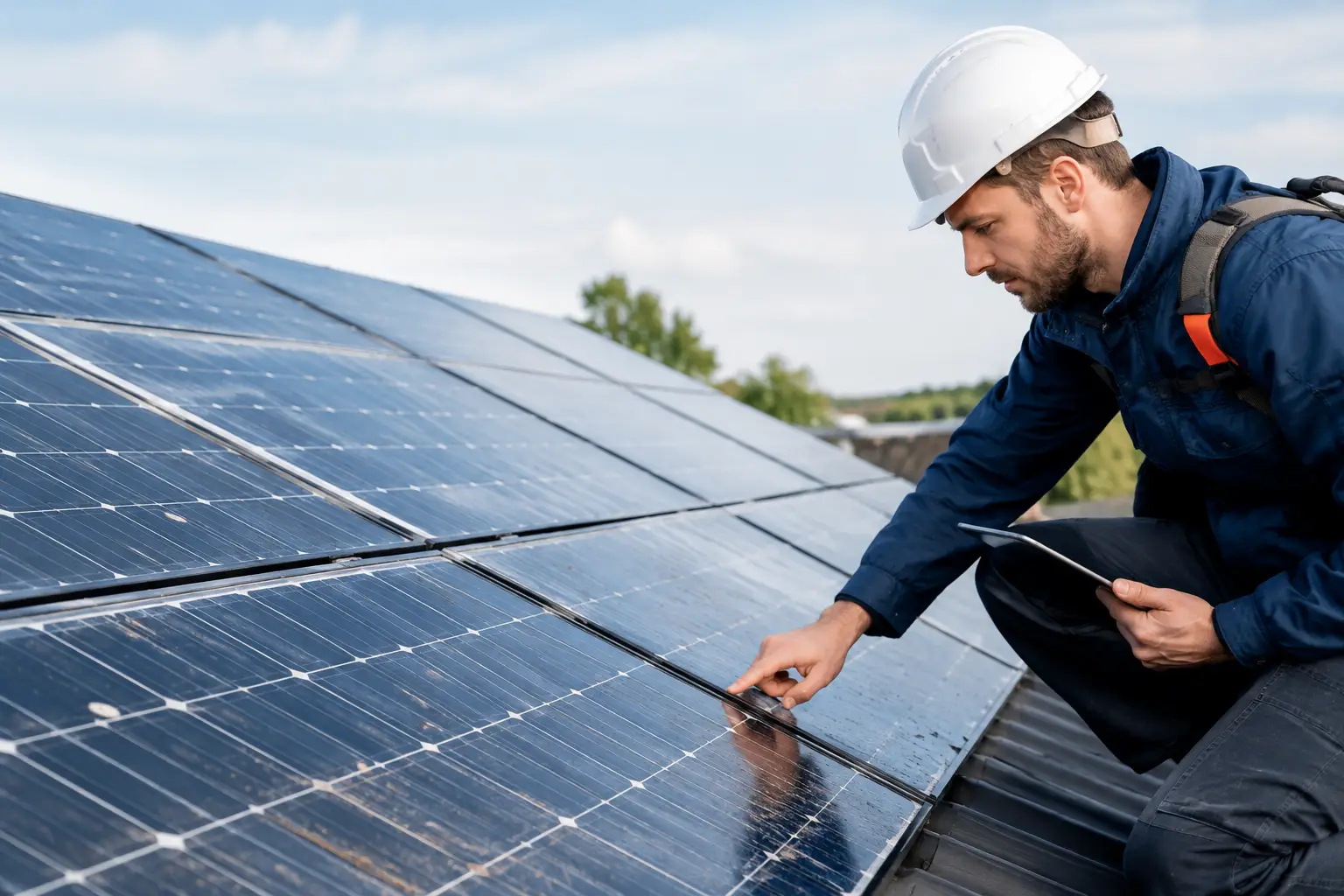
Storm damage, hail, falling branches, and work on the roof are well-known causes. But age also plays a role. Therefore, do not ignore visible damage, even if the installation is still producing power. An inspection clarifies whether the panel can safely remain in place and whether the performance is still acceptable.
Birds and dirt under or on the installation
Pigeons and other birds like to seek shelter under solar panels. Their nests, droppings, and nesting material can restrict ventilation under the panels. They can also damage cables or clog drainage points on the roof. With an older installation, where components may already be more vulnerable, this increases the chance of malfunctions.
Dirt on the panels does not always lead to major losses, but stubborn soiling can noticeably reduce the yield. Think of moss, leaves, dust, pollen, or droppings. Especially when dirt accumulates locally, it can affect the performance of an entire part of the installation. Professional cleaning is done with suitable materials and without unnecessary risk to the panels or yourself.
Insufficient insight into performance
Sometimes the biggest risk is simply that no one is looking. Many owners only receive a notification when the inverter stops completely. But an installation can also fail partially. In that case, it still produces power, just much less than it should.
With active monitoring, you see deviations faster. You can compare yields with previous periods, detect malfunctions, and intervene effectively. This is especially valuable when you are not technically inclined yourself or when your installation is located on a second home, business building, or a difficult-to-reach place. Fast detection limits the period in which you lose yield.
Not every old system requires the same approach. An installation with healthy panels and a defective inverter can still perform well for years after a targeted intervention. In the case of several recurring problems, sharply decreased yields, or difficult-to-obtain parts, a partial renewal may be more interesting.
Don’t wait until your inverter turns red or your energy bill suddenly rises. An inspection is wise when your installation is older than ten years, your yield seems lower than before, or you no longer have access to monitoring. A technical check is also recommended after storm damage, roof work, a change of ownership, or the bankruptcy of your original installer.
Also watch for signals such as error codes, unusual noises from the inverter, flashing LEDs, damaged cables, or visible dirt and nests. Never look under the panels or at electrical connections without the proper knowledge. Solar panels produce power as soon as light hits them. Safety always comes first.
Repair, renew, or continue managing?
Not every old system requires the same approach. An installation with healthy panels and a faulty inverter can continue to perform well for years after a targeted intervention. In the case of various recurring problems, significantly decreased yields, or hard-to-find parts, a partial renewal may be more advantageous.
This is often called repowering: you keep what is still sound and renew the parts that are holding back your yield. The best choice depends on your consumption, the technical condition of the roof, the existing electrical installation, and your plans for the coming years. For example, someone who uses more electricity due to a heat pump or electric car may have different needs than at the time of the original installation.
An independent technical assessment prevents you from replacing too quickly, but also from waiting too long. You get clarity on the cause of the problem, the safety status, and the expected yield after repair or renewal.
Prevention keeps your installation profitable
Good management of an older solar installation is all about follow-up. Regular inspections, yield monitoring, timely cleaning, and fast technical assistance prevent small deviations from becoming large losses. This gives you certainty about what your installation is actually producing.
Solar Assistance has been helping owners with the technical management of existing installations since 2012. Even if your original installer is no longer reachable, you can have your installation professionally monitored again. This way, an older installation doesn’t remain a question mark on your roof, but a reliable source of energy and yield.