


Can hail damage solar panels? Here is what to do
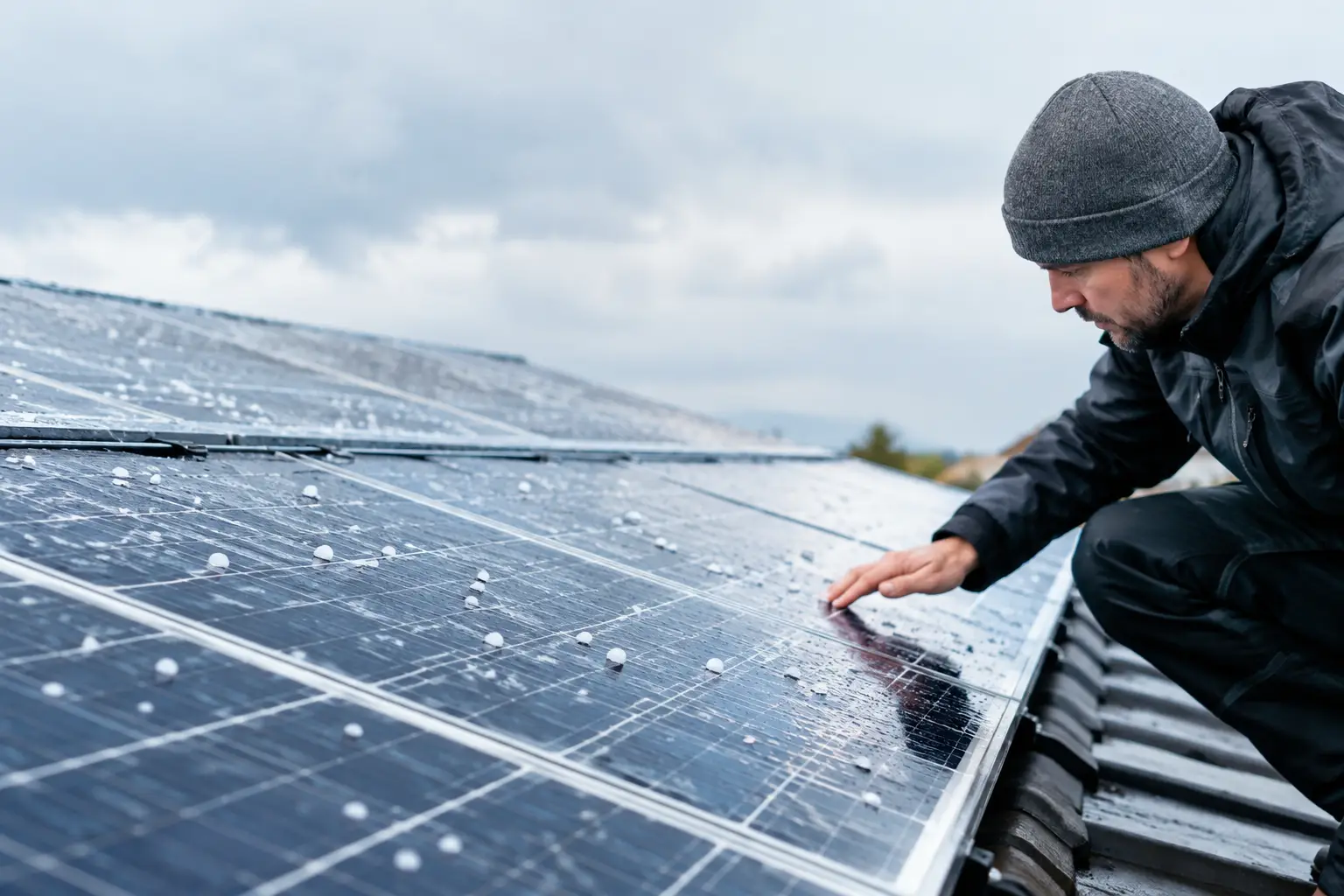
A hailstorm hitting your roof for minutes naturally causes concern. But can hail damage solar panels? Yes, it can. Most modern solar panels can withstand a lot, but exceptionally large hailstones, strong wind gusts, and existing weak spots can indeed cause damage. Furthermore, this damage is not always immediately visible from the ground.
Before you reach for a ladder, it is good to know what to look for. A safe check and a quick assessment help you prevent loss of yield, electrical risks, and further damage.
How well do solar panels withstand hail?
Solar panels are made for outdoor use. The glass layer on the front is usually tempered glass and is designed to withstand rain, wind, frost, and normal hailstorms. Most panels are tested during production against hail impacts of fixed sizes and speeds.
However, that does not mean every panel survives every hailstorm without risk. Especially hailstones larger than about two centimeters, combined with powerful winds, can hit the glass with great force. The angle of the roof also plays a role. Panels that lie flatter handle an impact differently than panels on a steep roof.
The age and condition of your installation are at least as important. A panel with small existing cracks, a damaged frame, or loose mountings is more vulnerable. Therefore, preventive maintenance is not just a matter of cleanliness, but also of certainty regarding the technical state of your installation.
What kind of hail damage can occur?
The most obvious damage is broken or cracked glass. If you see a star-shaped crack, a pit, or loose glass splinters, do not touch the panel. Even if the panel still seems to produce power, moisture can penetrate. This can later lead to corrosion, short circuits, or permanent loss of efficiency.
Less visible are micro-cracks in the solar cells. These fine cracks are located under the glass layer and are often invisible to the naked eye. They can be caused by a heavy impact, but also by tension in an older panel. Initially, the yield sometimes remains almost the same. Over time, parts of the cell may function less effectively, causing production to gradually decline.
Hail can also cause damage to components around the panel. Think of cables, connectors, inverters, roof penetrations, and mounting materials. Especially with an installation on an older roof, it is wise to have everything checked for stability and watertightness after severe weather.
Check safely after a heavy hailstorm
Do not go onto the roof yourself to inspect panels up close. A wet roof is slippery, and damaged glass makes the situation extra dangerous. First, look from the ground, possibly with binoculars, and check for visible cracks, loose parts, or striking discolorations.
Next, look at your inverter. If an error message is lit, production is unusually low, or the inverter shuts down, there may be more going on than superficial damage. Compare the yield with similar sunny days. Take cloud cover and the season into account. One low production day proves nothing, but a clear decline that persists deserves investigation.
If you have access to production data per panel or per string, you can compare more specifically. A deviating panel or an entire series performing poorly can indicate damage or a malfunction. With professional monitoring of solar panels, such deviations become visible faster, even if you don’t check the app daily yourself.
Take photos of visible damage from a safe place. Also note the date, the time of the hailstorm, and any error messages. This helps with a technical assessment and may be necessary for your insurance claim.
When should you call for help immediately?
In case of visibly broken glass, a loosened panel, damaged cabling, or an error message on the inverter, it is best not to wait. Only switch off the installation if you can do so safely according to the instructions of your inverter or distribution box. Do not touch any cables, connectors, or damaged panels.
Even without visible breakage, a check can be wise if the hail was exceptionally large or if the yield is noticeably lagging. A technician can assess the panels, cabling, mounting, and electrical values. Where necessary, a targeted measurement is performed to rule out hidden damage.
At Solar Assistance, certified technicians perform inspections and repairs for existing installations, even when the original installer is no longer reachable. This gives you clarity on the condition of your installation and the steps needed to limit downtime.
Does hail damage always affect your yield?
Not always. A small superficial damage does not necessarily have a measurable effect on production. However, waiting is often not a good plan when the glass is damaged. Due to temperature differences, rain, and frost, a small defect can become larger. What seems like a limited problem today can later affect a panel or an entire string.
With micro-cracks, the effect is even harder to estimate. The installation may continue to work, but the electrical connections in the cells become weaker. As a result, efficiency can gradually decrease. In larger installations, even a limited loss per panel can become noticeable on an annual basis in your energy bill or business results.
An inspection also provides insight into the rest of the installation. If hail exposes one weak spot, you want to know if the mounting, connectors, and seals elsewhere are still in good condition. That is the core of good solar panel maintenance: solving problems before they lead to long-term failure.
What do you do about insurance?
Hail damage to solar panels is often covered by your fire insurance, usually through the storm or natural disaster coverage. The exact coverage varies per policy. Therefore, check your terms and conditions before having repairs carried out, except when there is an acute safety risk.
Report the damage to your insurer as soon as possible and keep photos, production data, error messages, and a technical report. A clear diagnosis makes it easier to demonstrate what the damage is and what repair is needed. Also pay attention to your deductible and any conditions regarding age, wear and tear, or lack of maintenance.
Replacing a panel is not always the only solution. Sometimes a targeted repair is possible, for example to a connector, cable, or mounting. In case of serious glass damage, replacement is usually the safest choice. The right decision depends on the technical state, the type of panel, compatibility with your existing installation, and the expected long-term yield.
Preventing hail damage: what is and isn’t possible?
You cannot stop hail, but you can limit the chance of major damage. For a new installation, choose high-quality panels with solid hail resistance and have them mounted correctly. Proper mounting prevents tension on the panel and ensures that the frame and support structure do their job under wind loads.
For an existing installation, the emphasis is on inspection. Loose clamps, outdated cables, damaged frames, and dirt accumulation do not directly make your installation more sensitive to hail, but they can increase the consequences or hide problems. A periodic inspection keeps the installation reliable and helps to maintain your maximum energy yield.
Do not clean panels yourself immediately after a hailstorm with a brush or high-pressure cleaner. If the glass is damaged, you could worsen the damage or injure yourself. First, have it assessed whether cleaning is safe and useful. Only then can professional solar panel cleaning help to remove dirt, leaves, and residues that limit the yield.
After severe weather, it is not just about whether your panels still look intact. It is about knowing for sure that they will continue to work safely and continue to produce. A timely check gives you that peace of mind and prevents a small, invisible damage from eating away at your efficiency for months.