



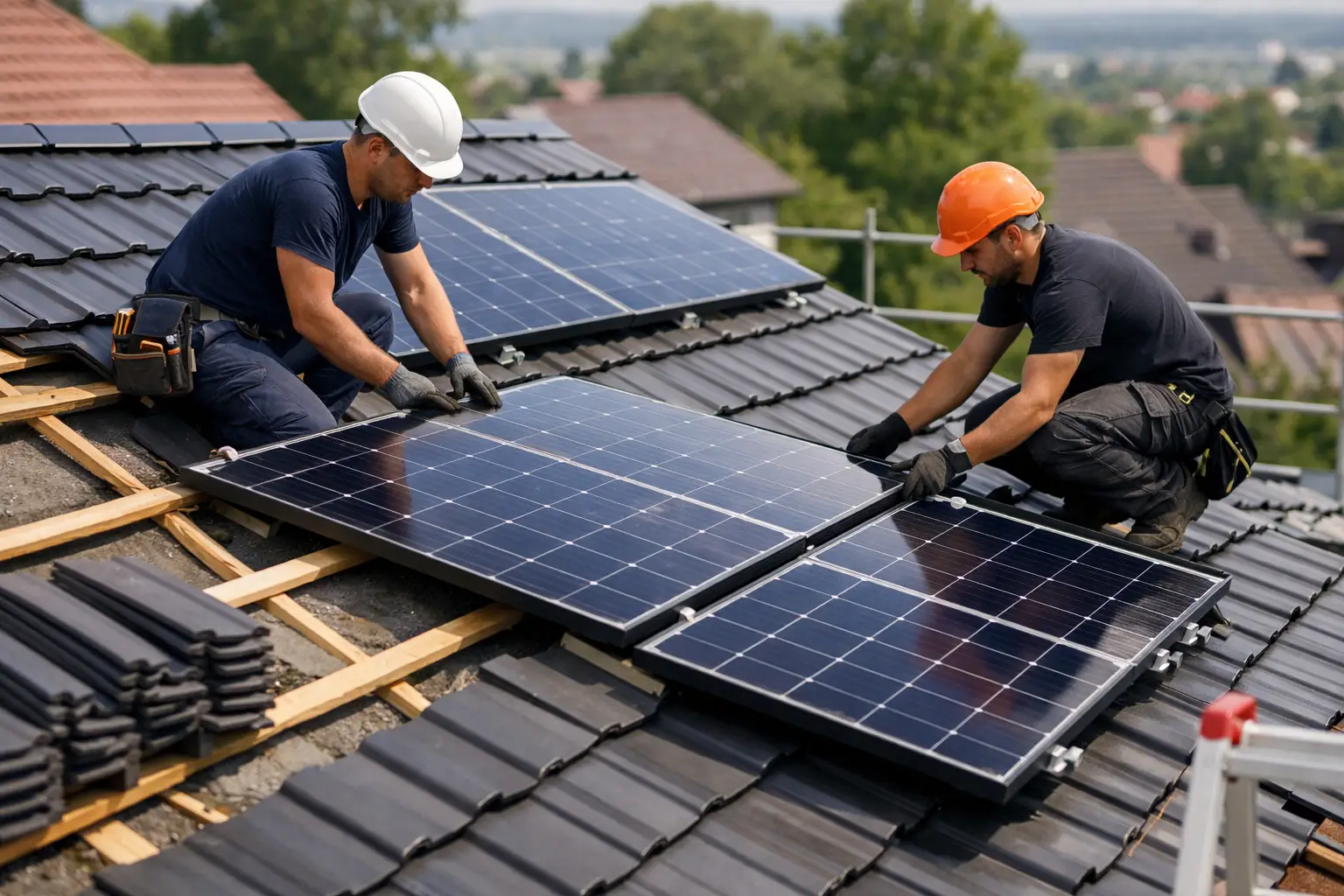
Reinstalling solar panels after roofing work
Your roof has been renewed, insulated, or repaired. That is good news for your home, but your entire installation will only work properly again once your solar panels are correctly back in place. Reinstalling solar panels after roofing work is more than just putting panels back on the roof. The mounting, cabling, grounding, and operation of the inverter all deserve a thorough check.
An error that goes unnoticed during reinstallation can later lead to yield loss, malfunctions, or even damage to the roof and installation. Those who have this carried out professionally choose continuity, safety, and maximum energy yield.
Why reinstallation is more than just remounting
Solar panels usually need to be completely removed for roofing work. This is done to work safely and to avoid damaging the panels, cables, and mounting materials. After the work, however, a new technical phase begins: the installation must be correctly rebuilt.
This involves looking at more than just the panels themselves. The support structure, roof penetrations, connectors, and cable runs must also be in order. For example, a new roof may have a different structure or thickness than before. As a result, existing mounting materials do not always fit anymore without adjustment.
The position of the panels also deserves attention. A small deviation in alignment is not always a problem, but shade from a dormer, chimney, or new ventilation element can have a noticeable effect on your yield. An installer who simply reinstalls without reassessing the situation may miss opportunities to prevent loss.
Check first, then reinstall solar panels after roofing work
A good reinstallation starts with an inspection of the roof and the existing components. Were the panels stored safely during dismantling? Is there visible damage to the glass, frame, or junction boxes? Is the mounting system still suitable for the renewed roof?
The technicians also check whether the roofing material is correctly finished around the mounting points. This is essential to prevent leaks. On a pitched roof, hooks and rails must be stably attached without disrupting water drainage. On a flat roof, the ballast, load-bearing capacity, and wind load must be reassessed.
It is wise not to automatically reuse all old materials. It is better to replace connectors, cables, or mountings that show wear and tear immediately. This limited intervention prevents you from incurring costs later for a malfunction that was already visible now.
Pay attention to the electrical connection
Physical mounting is followed by the electrical connection. The panels must be reconnected to the inverter according to the correct configuration. During this process, a technician checks, among other things, the polarity, connector connections, insulation values, and grounding.
A loose connector or damaged cable can cause an interruption in an entire string, a series of linked panels. This means that part of your installation produces little or nothing, while you might not notice this immediately without monitoring. That is why a test after reinstallation is not an extra, but a necessary step.
What should you have tested after reinstallation?
Once the solar panels are back in place, you don’t just want to see the inverter switch on. You want to be sure that the installation is performing as expected. A correct delivery therefore includes a check of the production, error messages, and communication with any monitoring systems.
The inverter often quickly indicates if there is a technical problem, but not every loss of efficiency appears as a clear error code. An installation can appear active and yet produce less due to a connection error, dirty panels, or a problem in a single string.
With professional monitoring of solar panels, the yield is structurally tracked. This way, you notice more quickly when production deviates from what fits the weather, season, and capacity of your installation. This provides peace of mind, especially if you do not want to check the inverter data yourself every day.
With older installations, it is also useful to compare results with historical production figures after the work. A lower yield may be normal due to different weather conditions, but a striking deviation deserves investigation. Acting quickly limits downtime and protects the return on your investment.
Choose the right time for reinstallation
Planning depends on the type of roofing work. In the case of a full roof renovation, it makes sense to only reinstall the solar panels after the roofing, finishing, and any insulation work are completely finished. This prevents roofers from having to work around the installation again later.
In the case of a local repair, partial dismantling may sometimes be sufficient. This is not always cheaper or easier. If cables, rails, and multiple panels need to be loosened, it may be safer to temporarily remove a larger part of the installation. The best approach depends on accessibility, the condition of the roof, and the construction of the existing installation.
Discuss the planning in time with both the roofer and the solar panel specialist. This avoids panels being stored unnecessarily long or the new roof being ready while the installation is still out of service for weeks.
Don’t forget the administration
When the configuration of your installation changes, for example due to extra panels, a different inverter, or a different connection, administrative steps may be necessary. It is also wise to carefully keep invoices, photos, and the inspection report for insurance purposes.
If the capacity and technical structure remain completely the same, the administrative impact is usually more limited. Nevertheless, it is useful to have what is necessary for your situation checked in advance. With assistance with administration for solar panels, you prevent a technically correctly executed reinstallation from causing questions or delays later.
Common mistakes that cost yield
The most common mistake is choosing based on the lowest price alone. Those who reinstall solar panels quickly without inspection, using worn material or without an electrical test, may save money on the day itself. But a poor connection, roof leakage, or unexplained yield loss often costs more later.
Cleaning is also regularly forgotten. Panels that have been stored or handled on a construction site may contain dust, dirt, or construction debris. This has a direct impact on the yield, especially when dirt accumulates locally. Professional cleaning of solar panels is mainly useful when the panels are visibly dirty. Unnecessary cleaning has no added value, but neither does leaving stubborn dirt behind.
Finally, many owners underestimate the importance of a final check. The installation may work at first glance, but that does not prove that all panels are performing optimally. Measured values, error codes, and yield data tell you more than a green light on the inverter.
Also a good time for preventive maintenance
Since the installation is dismantled anyway, this is a logical moment to look further than just reinstallation. Are cables still well protected? Is there corrosion on the construction? Are there leaves or dirt in hard-to-reach places? Are there traces of birds under the panels?
Birds can collect nesting material under the panels and damage cables. After roofing work, the installation is often easily accessible, making it easier to apply targeted bird protection for solar panels. This helps to limit future damage and maintenance work.
For those who want long-term certainty, periodic maintenance of solar panels is a wise choice. This involves looking not only at visible defects but also at components that could cause malfunctions later. Acting preventively means fewer unexpected outages and a longer lifespan for your installation.
Certainty after roofing work
A renewed roof deserves a solar installation that works safely, sturdily, and in a controlled manner once again. Therefore, do not just have the panels put back, but also have the full operation checked. Solar Assistance has been helping owners since 2012 to ensure existing installations perform reliably, even when the original installer is no longer reachable.
Always ask about the checks carried out after reinstallation and keep the documentation. This way, you know where you stand, you can recognize deviations faster, and your installation remains ready to generate energy for years to come. A good reinstallation doesn’t just give you panels on your roof, but above all peace of mind about what happens underneath and behind them.