


When to have solar panels inspected?
You often only notice it too late: the inverter shows no error message, the panels look fine at first glance, but the yield is lagging. This is exactly why the question of when to have solar panels inspected is not a minor detail. It helps determine how much power your system actually generates, how quickly problems are found, and how much peace of mind you have.
For many owners, a solar installation feels like something that should just keep working. And usually, it does. However, silent and inconspicuous does not automatically mean everything is running optimally. Small defects, dirt, wear and tear, or a malfunction in the monitoring can remain invisible for months. During that period, you lose yield without noticing it immediately.
When having solar panels inspected makes the most sense
The shortest answer is simple: have your system inspected as soon as there is a clear reason, and schedule periodic checks in addition. Waiting until a complete failure occurs is rarely the best choice. By then, you have often already lost out on yield.
A first logical moment is shortly after the first years of use. Not because solar panels immediately cause problems then, but because the installation has proven how it performs in practice from that point on. Cable connections, the inverter, mountings, and general operation can then be checked specifically. Especially if you do not have active follow-up via monitoring of your solar panels, such a check is wise.
An inspection is also smart after extreme weather conditions. Think of heavy storms, hail, high winds, or exceptional heat. Damage is not always visible from the ground. A panel may still look intact while a connector is loose or a mounting point is weakened. Early intervention prevents larger repairs and unnecessary loss of yield.
Furthermore, an inspection is recommended when you notice that the yield is lower than before without a clear reason. This doesn’t have to be a major defect. Sometimes it involves dirt, early wear, or an inverter that is performing less effectively. With targeted maintenance of solar panels, you prevent small deviations from growing into expensive downtime.
Signs that your installation should be inspected quickly
Some signs are clear. Others are more subtle. If your inverter gives an error code, the message is clear: have your system inspected. But even without an error code, you may have reasons to take action quickly.
A noticeably lower production is the best-known sign. Compare your current yield with the same period last year, and take the weather into account. If the difference is too large, something might be wrong. Especially with installations without daily follow-up, this type of loss often stays under the radar for too long.
Visible dirt is also a signal. Leaves, dust, moss, bird droppings, or stubborn deposits can reduce performance. On some roofs, this effect is limited. On other installations, the loss adds up quickly. Professional cleaning of solar panels is then not a luxury, but a way to bring your yield back up to standard.
Do you hear unusual noises from the inverter, see loose cabling, or notice that panels appear visually shifted? Then it’s better not to wait. The same applies if your installation is getting older and has never been thoroughly checked before. A system that has run for years without problems deserves a preventive look for that very reason.
How often is an inspection necessary?
There is no fixed rule that is perfectly right for every installation. How often you should have solar panels inspected depends on the age of your system, the location of the roof, the degree of dirt, the type of inverter, and the presence of monitoring.
For a residential installation, a periodic check every few years is often a sensible baseline. Not excessively often, but also not only when something fails. If you have a larger system, an agricultural site, a commercial building, or an installation in a location with a lot of dust, leaves, or birds, a higher inspection frequency is more logical.
If you have no insight into the performance per panel or string, regular inspection is extra important. Otherwise, you miss the moment a deviation begins. With continuous follow-up, you can intervene faster and limit the chance of long-term yield loss.
When to have solar panels inspected after 5, 10, or 15 years
The age of your installation plays a major role. In the first few years, most systems operate stably. Yet even then, an error in connection, monitoring, or inverter settings can affect performance.
Around five years, a first more thorough inspection is often useful. Not because parts are worn out, but because a preventive check provides certainty. You know whether everything is still correctly secured, working safely, and performing as expected.
Around ten years, the importance of inspection increases noticeably. Inverters are then in a phase where wear occurs more frequently. Connectors, cables, and roof penetrations also deserve attention. With older installations, it pays to not just react to defects, but to look more broadly at yield and lifespan.
From fifteen years onwards, the question becomes even more relevant. Then it’s not just about preventing malfunctions, but also about whether certain parts are still the best choice economically and technically. Sometimes a repair is enough. Sometimes a targeted intervention or technical update is more interesting for your long-term yield.
Not only for malfunctions, but also for changes in ownership or file issues
An inspection is also wise at moments that seem to have nothing to do with technology. If you buy a home with existing solar panels, you often don’t know exactly how the installation was maintained. A check provides clarity on the condition, safety, and performance of the system.
The same applies when your installer is no longer active or you have nowhere to go with questions. This happens more often than many people think. In such a situation, you want a partner who doesn’t focus on new sales, but on operation, continuity, and quick help if something goes wrong. If there are also questions about inspections, documents, or insurance claims, administrative support for solar panels can also provide peace of mind.
What exactly is inspected?
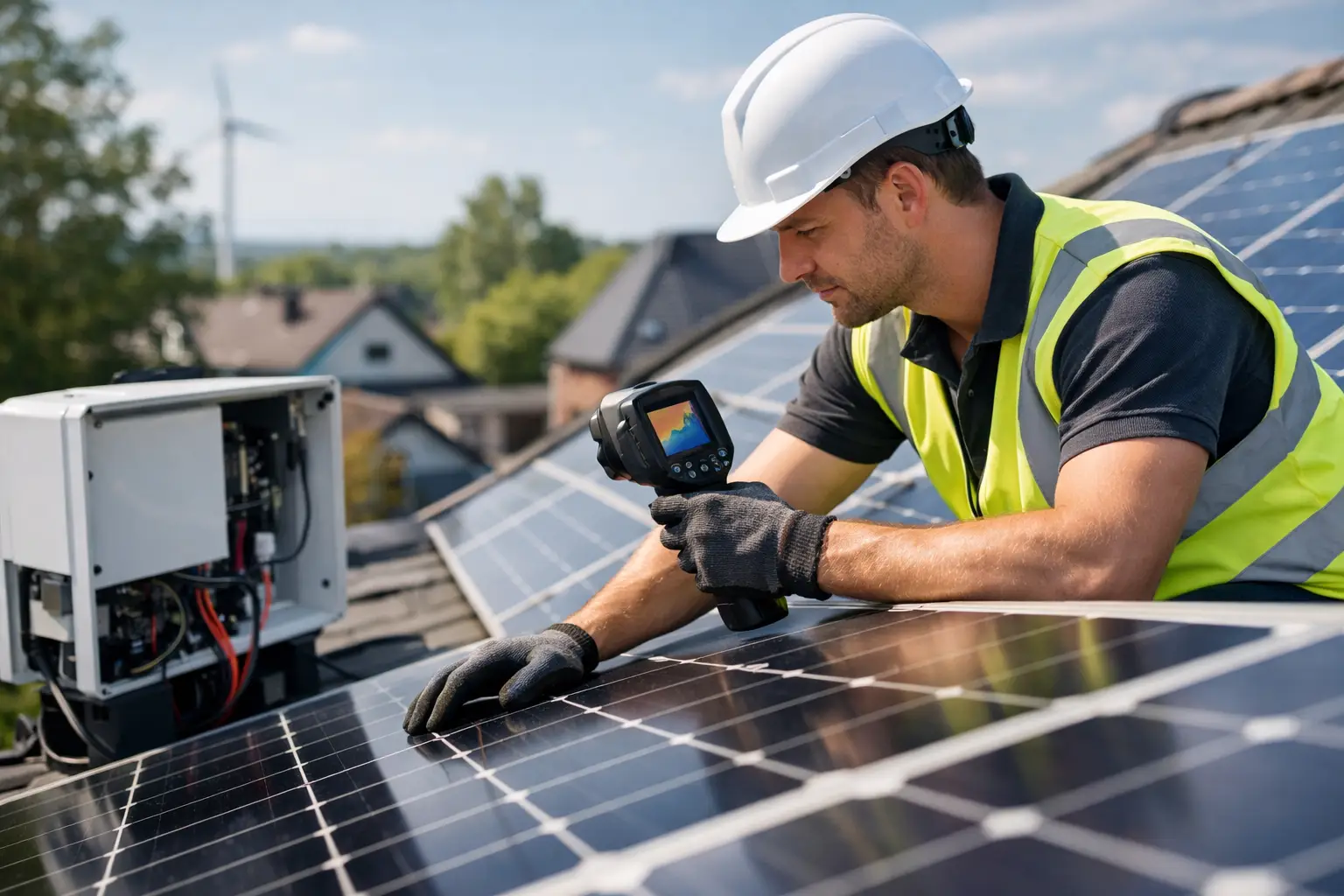
A good inspection goes further than just glancing at the panels. The technical state of the installation must be correct, but the performance must also be assessed. This means checking whether the panels are still producing logically, whether the inverter is working correctly, whether there is any visible damage, and whether the electrical connections are safe.
In addition, we look at dirt, potential shading issues, wear, and external influences such as birds under the panels. Especially nests and dirt accumulation under the system can cause damage, noise nuisance, and reduced ventilation. In that case, bird protection for solar panels can help prevent later problems.
A professional inspection is therefore not just about whether it’s broken or not. It’s about the broader question: is your installation still working as it should? That difference is important, because many systems still function, but no longer optimally.
Have it inspected preventively or wait until something goes wrong?
Waiting seems cheaper at first glance. You only have someone come over when there is a real problem. However, in practice, that is often the more expensive choice. A malfunction that goes unnoticed for weeks costs yield. And a small technical problem that is not found in time can cause a larger repair later.
Preventive inspections primarily provide peace of mind. You know the installation is safe, that performance is being monitored, and that deviations surface faster. For individuals, this means less hassle and more certainty about your investment. For companies, it means less downtime and more continuity.
This doesn’t mean every roof needs an extensive intervention every year. It depends on the situation. But doing no follow-up at all is rarely the best strategy if you want to maintain maximum yield.
The best timing is before yield loss becomes visible
Those who wait until a problem is clearly visible are usually too late for the yield that was lost along the way. The best timing to have solar panels inspected is therefore not just when an error message appears, but precisely before that. During a periodic check, after bad weather, when in doubt about lower production, or as soon as you notice that no one is really monitoring your installation.
That is also where the real added value of a service partner lies. Not just repairing when something stops, but seeing problems coming sooner and intervening specifically. That provides certainty. And it helps your installation work longer, safer, and more profitably.
If you want to remember one rule of thumb, let it be this: the earlier you detect deviations, the smaller the impact on your yield and the fewer worries you have afterwards.