



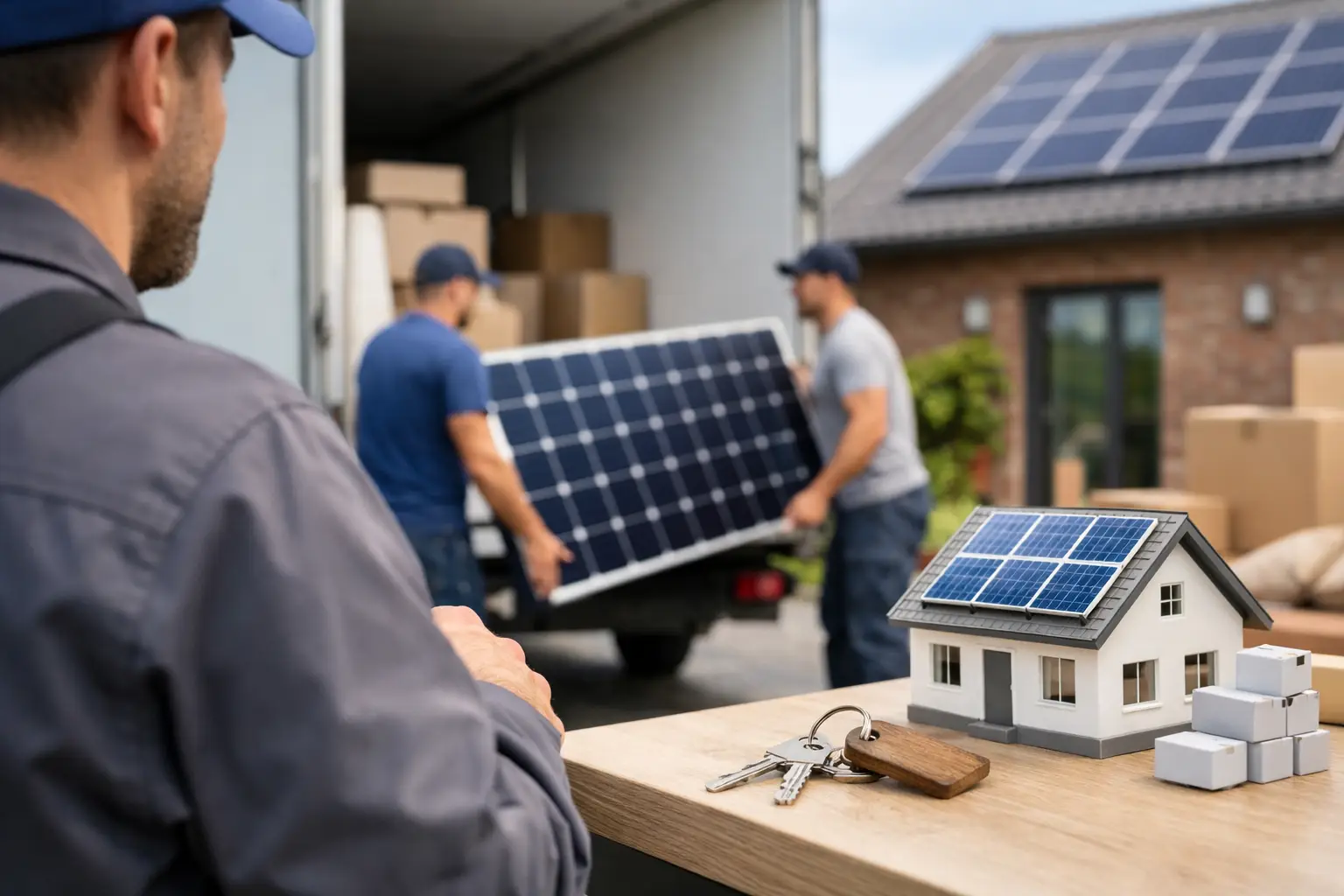
Relocating solar panels when moving house
Relocating solar panels when moving house sounds logical if you have an installation that can last for years. However, it is not a standard moving task. You are not just having panels removed from a roof; you are moving a complete system that must continue to operate safely, correctly, and profitably. Poor dismantling or an error during reinstallation can lead to damage, loss of yield, or an installation that only shows problems months later.
The first question, therefore, is not how to move the panels, but whether moving is financially and technically sensible in your situation. The answer depends on the age, condition, and yield of the installation, the new roof, and the costs for dismantling, transport, and reinstallation.
When is relocating solar panels a good choice?
A recent installation with high-quality panels and a well-functioning inverter is often a candidate for relocation. Especially when the panels are still well within their expected lifespan and the new roof has a favorable orientation. The savings on new panels can then outweigh the costs of the move.
For an older installation, the situation is more nuanced. Solar panels last a long time, but the inverter, cabling, and mounting materials do not always have the same remaining lifespan. Is the inverter already twelve years old or are there recurring faults? Then it may be wiser to keep only a part, replace components, or install a new system on the new home.
The old roof also plays a role. If the roof needs to be repaired or renewed before you sell, dismantling may be necessary anyway. In that case, it is interesting to have the installation thoroughly checked beforehand. This way, you know which parts are still reliable and prevent incurring moving costs for equipment that needs to be replaced shortly thereafter.
Start with a technical assessment
Before the move, have a professional look at the panels, the inverter, the support structure, and the electrical connection. A good assessment does not just map out visible damage. It also checks whether the installation still achieves its expected yield and whether there are signs of wear, moisture problems, or loose connections.
This check is important because an installation on the old roof sometimes seems to work well while a problem is already present. Think of a connector that gets hot, cable insulation damaged by sun and wind, or panels with deviating performance. If you move these defects with you, they can cause lower yield and extra intervention costs after reinstallation.
A yield analysis makes the difference. Compare production from previous years with the expected yield based on power, orientation, and season. With professional monitoring of solar panels, you can recognize deviations faster. This gives you an objective starting point: what did the installation produce before the move, and what is the minimum it should be able to deliver again after reinstallation?
The new roof determines more than you think
The fact that your panels are well-positioned on your current home does not automatically mean that the same setup on your new home is also ideal. The roof orientation, angle of inclination, available surface area, and shade directly determine your future yield. A dormer, chimney, tree, or taller building can provide more shade than expected at certain times of the day.
The load-bearing capacity and condition of the roof deserve equal attention. If you place panels on a roof that needs to be replaced within a few years, you may have to pay for dismantling and assembly again later. A prior inspection provides certainty about the roofing, the construction, and the most suitable mounting method.
The location of the inverter must also be reconsidered. Ideally, it should be hung in a well-ventilated area, accessible for maintenance and protected from excessive heat. An inverter in a warm, enclosed space can perform less effectively and wear out faster. Sometimes it is more efficient not to move the existing inverter, but to choose a model that better fits the new setup.
Ensuring safe dismantling and reinstallation
A professional relocation begins with de-energizing and documenting the installation. The technician notes how the strings are connected, checks the cabling, and takes photos of the existing situation if necessary. This prevents errors during reconstruction and makes it easier to compare performance afterward.
Afterward, the panels are carefully disconnected and dismantled. Panels are strong enough for years of use on a roof, but vulnerable to point loads, impacts, and incorrect stacking during transport. Small, invisible damage can later lead to moisture ingress, power loss, or safety risks.
On the new roof, the roof structure and mounting system are first correctly prepared. Old mounting materials are not always reusable. This depends on their condition, the roofing, and the new layout plan. Saving on mounting components is rarely a good idea: a solid system protects your roof and keeps the panels stable for years during wind and weather changes.
After assembly, the technician reconnects the panels, cabling, and inverter. Subsequently, the operation, safety features, and production are checked. Only when the installation starts up correctly and the measured values are right is the technical relocation truly complete.
Don’t forget administration, insurance, and warranties
A move also has administrative consequences. The details of the installation, the location, and sometimes the grid connection must be updated. The steps required depend on your region, type of meter, and the way the installation is registered. Arrange this in time to avoid disputes over meter readings, compensations, or the correct registration of your production.
Also check your home and fire insurance. Report that the solar panels are being dismantled, transported, and placed at a new address. Explicitly ask how damage during these phases is covered. With professional insurance for solar panels, you look not only at storm or hail damage but also at coverage for electrical damage, loss of yield, and repair costs.
In addition, keep the reports of the technical assessment, the invoices, and the serial numbers of the panels and inverter. These documents are useful for warranty claims, insurance files, and any later sale of the home. After reinstallation, also ask for the warranty on the work performed.
Don’t just calculate based on the moving price
The lowest quote is not automatically the most advantageous choice. With solar panels, the total cost over several years is what matters. Incomplete dismantling, a poor layout plan, or insufficient checking after reinstallation can cost you much more later in lost production and repairs.
Therefore, ask exactly what is included. Think of the technical inspection, dismantling, safe transport, new mounting material, assembly, adjustments to cabling, inspection where necessary, and the final check. Also ask how the installer handles damage that only becomes visible after the move.
A comparison with a completely new installation remains wise. With an older set, a new, correctly dimensioned installation on the new roof can provide more yield and fewer worries. With a young installation, relocating is often interesting, provided the new roof is suitable and the parts are in good condition.
Protect your yield after the move
The first months after reinstallation are the time to monitor performance extra closely. Yield varies with the weather, but unexpectedly low production, error messages, or frequent outages require quick action. With 24/7 monitoring, you can see faster when the installation deviates, even if you don’t look at the inverter daily yourself.
Also plan periodic maintenance. During a move, parts are moved and reconnected. A preventive check helps to find loose connections, dirt, damaged cables, or emerging problems in time. If the move places panels in a spot where dust, leaves, or bird droppings accumulate faster, professional cleaning of solar panels can help limit unnecessary loss of yield.
Solar Assistance guides owners of existing installations through technical checks, faults, and the preservation of yield. Especially if your original installer is no longer reachable, an independent service partner provides peace of mind: you know who to call if production lags or an error message appears.
Anyone moving already has enough decisions to make. Therefore, let the choice regarding your solar panels be based on a technical assessment and a realistic yield calculation. Then not only does your installation move with you, but also your certainty that it will continue to do at the new address what you originally invested for: producing reliable energy.