


Gradual performance decline in solar panels
Your solar panels don’t usually fail overnight. More often, you lose a small portion of your yield month after month without a clear error message. What causes this gradual performance decline in solar panels? Usually, it is not a single major defect, but a combination of soiling, shading, wear and tear, or a technical issue that goes unnoticed. This is precisely why yield and monitoring deserve more attention than just checking if the inverter is still running.
An installation that produces power is not necessarily operating optimally. Especially when you don’t compare the yield with previous years, similar days, or other parts of your installation, a loss can remain hidden for a long time. This costs energy, savings, and ultimately, peace of mind.
What causes a gradual performance decline in solar panels?
A limited drop in yield is not always a problem. The amount of sun varies from year to year. Temperature, cloud cover, and the orientation of your roof also play a role. However, a recurring loss that is greater than what you would expect based on the weather requires investigation.
The most common causes are often in places you cannot see directly: on the glass of the panels, under the panels, in the cabling, or in the inverter. Furthermore, those who only look at a total production figure may not always see which specific panel or string is underperforming.
Soiling that blocks light
Dust, pollen, sand, soot, leaves, and bird droppings block part of the sunlight. This sounds harmless, but localized soiling can have a greater impact than a uniform layer of dust. A single stubborn stain or an accumulation of leaves along the bottom edge can cause uneven loading on a panel.
Soiling is primarily a risk for roofs in agricultural environments, near heavy traffic, trees, industry, or the coast. A low roof pitch also makes it harder for rain to wash away dirt. Rain, therefore, is no guarantee of clean panels.
A professional check distinguishes between normal soiling and deposits that actually affect the yield. Targeted solar panel cleaning prevents you from losing energy and reduces the chance of permanent stains or localized overheating.
New shading on an existing roof
Shading sometimes changes gradually. A tree grows, a hedge gets taller, a dormer window is installed, or a chimney casts a longer shadow in a different season. Moss growth, an antenna, or temporary materials on the roof can also disrupt light intake.
A small amount of shade does not always have a small effect. Panels are electrically connected to each other. Depending on the configuration of your installation, one weaker panel can affect the performance of multiple panels. Modern optimizers sometimes limit this effect, but they do not solve every shading problem.
Pay particular attention to a yield that remains lower than expected on sunny days. Shading is often more visible in the production curve than in the monthly total. An inspection at different times of the day provides more clarity than a quick glance from the ground.
Wear and tear and early damage to panels
Solar panels are built for a long lifespan, but they are exposed to sun, wind, hail, frost, and temperature fluctuations for years. This stress can lead to small defects, such as micro-cracks in solar cells, delamination at the rear, moisture ingress, or discoloration.
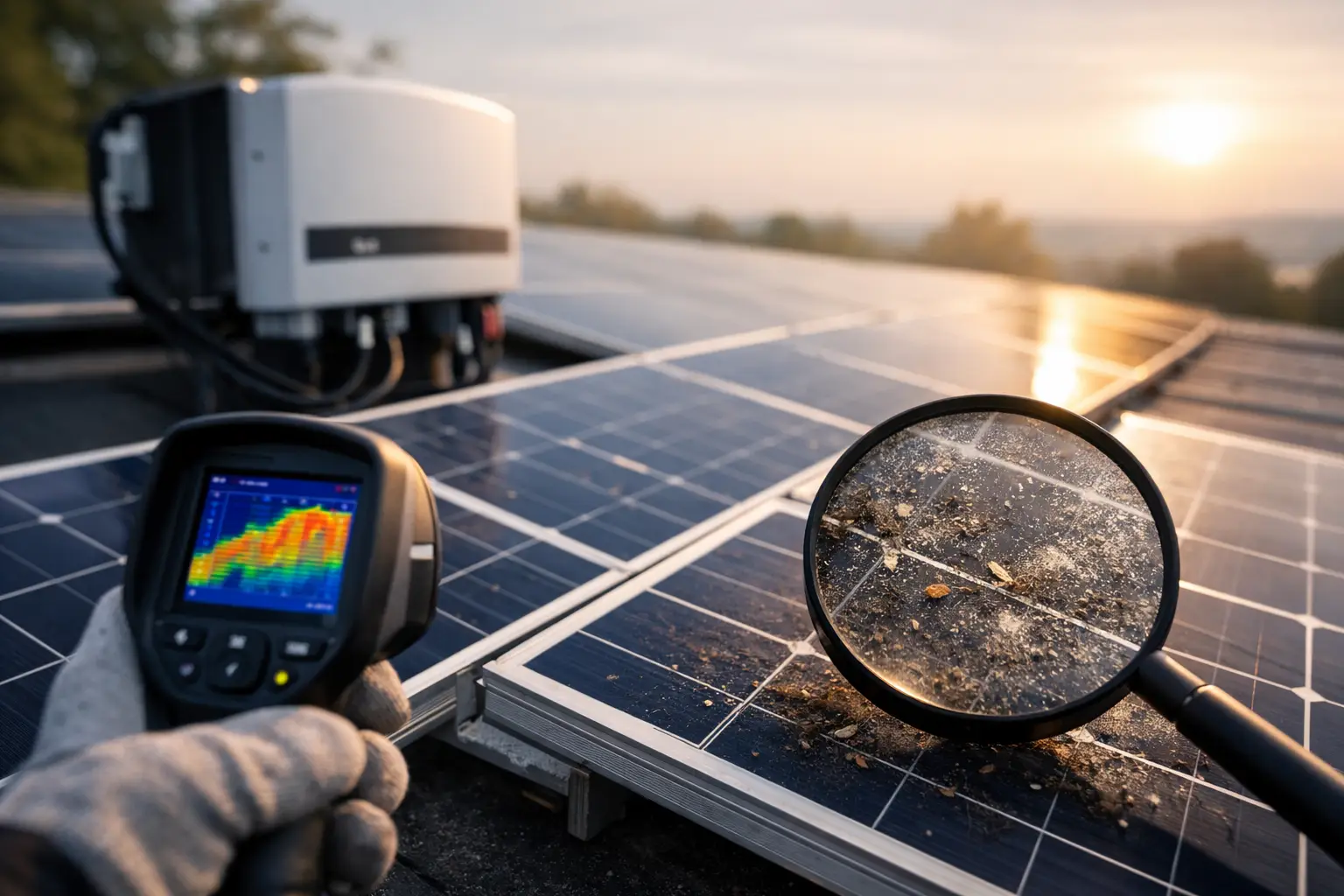
Many of these deviations are not visible to the naked eye. A panel can look fine on the outside and still deliver less power. Hotspots can also develop: small zones that become warmer due to a defective cell, poor connection, or localized soiling. This not only lowers the yield but can cause further damage under sustained load.
This is where preventive maintenance is valuable. A technician does not just check what is visible, but also assesses the electrical performance and the overall condition of the installation. This allows you to address a developing problem before it turns into a failure.
Issues with the inverter, cabling, or connectors
The inverter converts the direct current from your panels into usable alternating current, making it a crucial part of your installation. An inverter may still be functioning, but performing less efficiently due to internal wear, heat, settings, or temporary error messages.
Cables and connectors also deserve attention. Loose connections, damage from weather influences, rodents, or incorrect installation can cause resistance. As a result, energy is lost before it reaches the inverter. In some cases, you will see a clear malfunction; in others, the yield only drops gradually.
A technical check therefore looks beyond the inverter screen. Measurements per string and a check of connections can reveal deviations that you wouldn’t notice yourself. Prompt technical assistance is particularly useful when production drops sharply, the inverter gives error codes, or part of the installation fails.
Birds and damage under the panels
Pigeons and other birds often seek shelter under solar panels. They build nests, bring in twigs and leaves, and leave droppings on the panels. This leads to increased soiling and sometimes to blockages in the roof drainage.
Additionally, birds can damage cables or accumulate materials under the panels. The problem often starts small but grows larger when there is no physical barrier. Bird protection keeps the space under the panels accessible for ventilation without allowing birds to nest there.
Outdated settings and changed circumstances
Sometimes the cause is not a defect, but an installation that no longer matches the current situation. This could include an inverter with suboptimal settings, a change in grid voltage, or a roof extension that is not properly coordinated with the existing installation.
Energy consumption in the home can also cloud your perception. Are you still producing the same amount, but using more power at different times? Then your self-consumption might drop, even though the panels are technically working fine. Production and savings are not the same thing; a proper analysis makes that distinction clear.
How do you recognize a hidden loss of yield?
The best first step is comparison. Don’t just look at yesterday or last week, but at the same period in previous years. Compare days with similar weather. For example, a hot, sunny day often yields slightly less than a cool, clear day because panels become less efficient at high temperatures.
Also, watch for patterns. Does the yield drop suddenly after nearby construction work or a storm? Do you see regular short interruptions? Does production lag around noon while the sun is fully shining? If so, an investigation is wise.
Monitoring of solar panels makes these patterns visible much faster. A good system tracks performance continuously and reports deviations before you discover them yourself in a monthly report. This is especially reassuring if you don’t want to check the inverter daily or if you manage multiple installations.
For larger roofs, monitoring is even more important. A loss of a few percent may seem limited, but on an annual basis, it can cost a noticeable amount of energy and savings. Moreover, timely detection prevents a small technical problem from leading to long-term downtime.
What can you do yourself and when should you call for help?
You can safely check a few things yourself. Look from the ground to see if there are many leaves, visible bird debris, or new shadows on the panels. Also check if the inverter shows an error message and if production deviates significantly from previous sunny days. Do not go onto the roof yourself and do not open any electrical connections. This involves risks and can worsen damage.
Call in a specialist if the decline persists, if you see error codes, or if you cannot explain why the yield is changing. A targeted inspection eliminates guesswork. You will then know if cleaning is sufficient, if there is shading, or if a technical component needs attention.
Solar Assistance has been working on the yield of existing solar installations since 2012. With monitoring, inspection, and maintenance, deviations are found faster and installations continue to perform reliably for longer. This gives you more certainty about what your panels are actually delivering.
A solar installation does not require daily care, but it does need timely attention. Those who take small deviations seriously prevent unnecessary yield loss and keep the installation ready for the years to come.