


Experiences with solar panel intervention services
An inverter that suddenly fails, an error message that keeps returning, or solar panels that produce significantly less: at such a moment, you don’t want general advice, but a solution. Experiences with solar panel intervention services show that speed, a correct diagnosis, and clear communication make the difference. Because every day that an installation produces less or nothing at all, yield is lost.
For many owners, the search only begins when something goes wrong. Sometimes the original installer is no longer reachable. Sometimes the warranty period has expired, or a malfunction drags on for too long. A good intervention service not only resolves the malfunction but also investigates why it occurred. This is essential to avoid the same problems later on.
What do customers expect from a solar panel intervention service?
Anyone asking for help with a malfunction primarily wants certainty. Is the installation working safely again? Is the problem truly solved? And how much yield was lost? Good experiences are rarely just about a quick repair. They are about a technician who listens, checks the situation, and explains what is going on in understandable language.
An intervention may be necessary for a wide variety of problems. The inverter may fail, a residual current circuit breaker may trip, or a cable connection may be damaged. Problems with communication, monitoring, or an energy meter can also mean you have less insight into the performance of your installation. With older installations, wear and tear, moisture, or loose connectors often play a role.
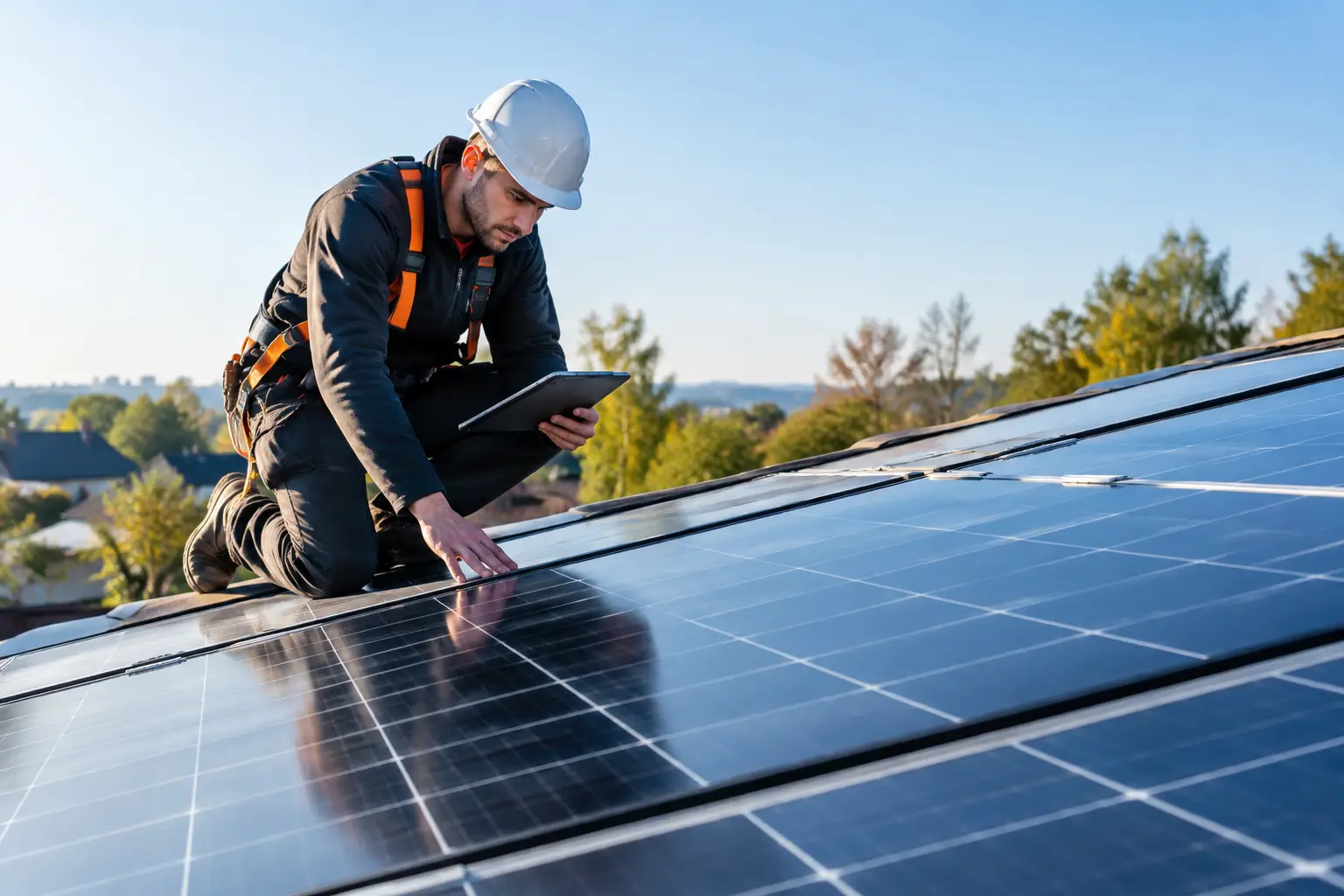
The best service does not start with guesswork. A technician checks the installation step by step, from the solar panels and cabling to the inverter and safety devices. This way, not only the visible symptom is addressed; the cause receives attention.
Experiences with solar panel intervention services: what makes the difference?
Owners’ experiences are often remarkably similar. People appreciate a quick response but also expect that parts are not replaced unnecessarily. A correct diagnosis prevents costs that solve nothing. This is important, especially when a malfunction only occurs occasionally or when the yield has gradually decreased.
A reliable intervention service makes it clear in advance what you can expect. Think of the suspected approach, any call-out charges, the availability of parts, and the timeframe in which a technician can visit. In the case of urgent malfunctions, it is reassuring to know when you will receive a response. A response time of maximum 48 hours provides guidance, although the actual repair naturally depends on the cause and any necessary spare parts.
Communication after the intervention also counts. You want to know which checks were performed, what was repaired, and if any points of attention remain. A clear intervention report is not a minor detail. It helps you monitor the state of your installation and is useful for insurance, warranty, or a later sale of your home.
Quick help is valuable, but safety always comes first
When an installation has stopped, there is a strong tendency to check cables, fuses, or the inverter yourself. However, this is not always wise. Solar panels continue to produce voltage as soon as light hits them. Problems with electricity, insulation, or connectors require a safe approach by a qualified technician.
A good intervention service therefore works not only quickly but also carefully. The technician checks whether the installation can be safely restarted. In case of damage by storms, rodents, birds, or moisture, a temporary solution is sometimes possible, but a permanent repair may require extra materials. Honest explanations about this prevent false expectations.
Monitoring shortens downtime
Many malfunctions are only discovered when you happen to look at the inverter or when the energy bill is disappointing. This can mean that an installation has been producing less for days or weeks. With active follow-up, you see deviations faster and an intervention can be scheduled earlier.
That is the added value of professional solar panel monitoring. Not every lower yield indicates a defect. Cloud cover, seasons, and high temperatures affect production. However, monitoring compares performance over a longer period and makes deviations more visible. This way, a problem is not only addressed when the yield has already noticeably dropped.
For owners who want maximum peace of mind, monitoring and technical assistance together form a logical combination. Monitoring signals, an intervention service investigates and repairs when necessary.
When is an intervention needed?
An error code on the inverter is a clear reason to call for help, but less visible signals also deserve attention. Do not wait too long if you recognize one of these situations:
- Your inverter shows a red message, no longer starts up, or fails regularly.
- Your production remains unexpectedly low, while weather conditions are comparable to previous years.
- The monitoring app no longer shows data or reports a communication problem.
- You hear strange noises, smell burning, or see visible damage to cabling, panels, or the inverter.
- The installation regularly switches off after rain, a storm, or work on the electrical installation.
In case of visible damage or a suspicion of an electrical risk, do not restart the installation yourself without a check. Safety comes before yield. A day of production loss does not outweigh the risk of an unsafe installation.
Not every drop in yield requires an immediate repair
Sometimes an intervention reveals that the installation is technically in order, but that dirt, shade, or encroaching vegetation is limiting the yield. Bird droppings and leaves can also have a clear local effect, especially on panels with a low tilt angle. In that case, a repair is not the right solution.
Professional solar panel cleaning can be useful when dirt accumulates structurally and affects the yield. The effect varies by location, environment, and type of pollution. Those living next to a busy road, near farmland, or under trees often benefit more from a targeted check than someone with an unobstructed roof.
Birds also deserve attention. Nests under panels can damage cables, hold moisture, and cause noise nuisance. Bird protection not only addresses the nuisance but also helps limit damage and future interventions.
How to get more out of an intervention
An intervention proceeds more efficiently if you gather a few things beforehand. Note down error codes, take a photo of the message if it is safe to do so, and keep your inverter details handy. Do you know when the malfunction started or when the yield dropped? Share that too. This information helps the technician to search more specifically and quickly.
Afterward, ask what preventive action is useful. This could be a check of connectors, an update of the inverter, additional monitoring, or planned maintenance. Preventive maintenance takes time but can prevent unexpected downtime and major repairs. Especially for installations that have been running for several years, a periodic technical check is not an unnecessary luxury.
Solar Assistance has been working on the yield and continuity of existing solar installations since 2012. With its own technical service, national coverage in Belgium, and experience with residential and larger installations, the focus is not on selling panels, but on what matters afterward: an installation that continues to work safely and produces at its maximum.
So, don’t just look at how quickly a malfunction is resolved. Choose an intervention service that looks beyond today’s error message. A clear diagnosis, solid repair, and targeted prevention ultimately give you what solar panels are intended for: reliable energy yield, with as little worry as possible.