


Storm damage to solar panels: what should you do now?
A heavy gust of wind, hail, or a fallen branch can affect more than just your roof. In the event of storm damage to solar panels, you primarily want to know quickly if your system is still operating safely and if your yield is at risk. Waiting until your next energy bill is not a good plan. Damage is not always visible from the ground, while a loose connection, crack, or moisture problem can lead to system failure.
Safety first, then inspection
Do not go onto the roof yourself after a storm. Even if you only suspect a single loose panel or a cracked glass plate, the mounting, cabling, or roofing may be damaged. Solar panels produce electricity as soon as light hits them. Therefore, do not touch any loose cables, connectors, or components.
Do you see a panel lying on the ground, are there loose cables, or is there damage to the meter cupboard or inverter? Keep your distance and, if it is safe to do so and you know how, shut down the system according to your inverter’s instructions. In case of acute danger, such as sparks, smoke, or a damaged electrical cabinet, contact emergency services immediately.
From a safe location, you can already check a few things. Look for visible damage to panels, roof tiles, gutters, and mountings. Also check if there are branches, leaves, or other debris on the system. Take clear photos of the situation before removing anything. These images are useful for your insurer and for the technician assessing the damage.
What types of storm damage to solar panels are common?
Storm damage is not limited to a broken panel. High winds can put stress on mounting hooks, rails, and clamps. If a component shifts, it can cause pressure on the panel or the roofing. With older systems, the mounting points deserve extra attention, especially when they have been exposed to wind, rain, and temperature fluctuations for years.
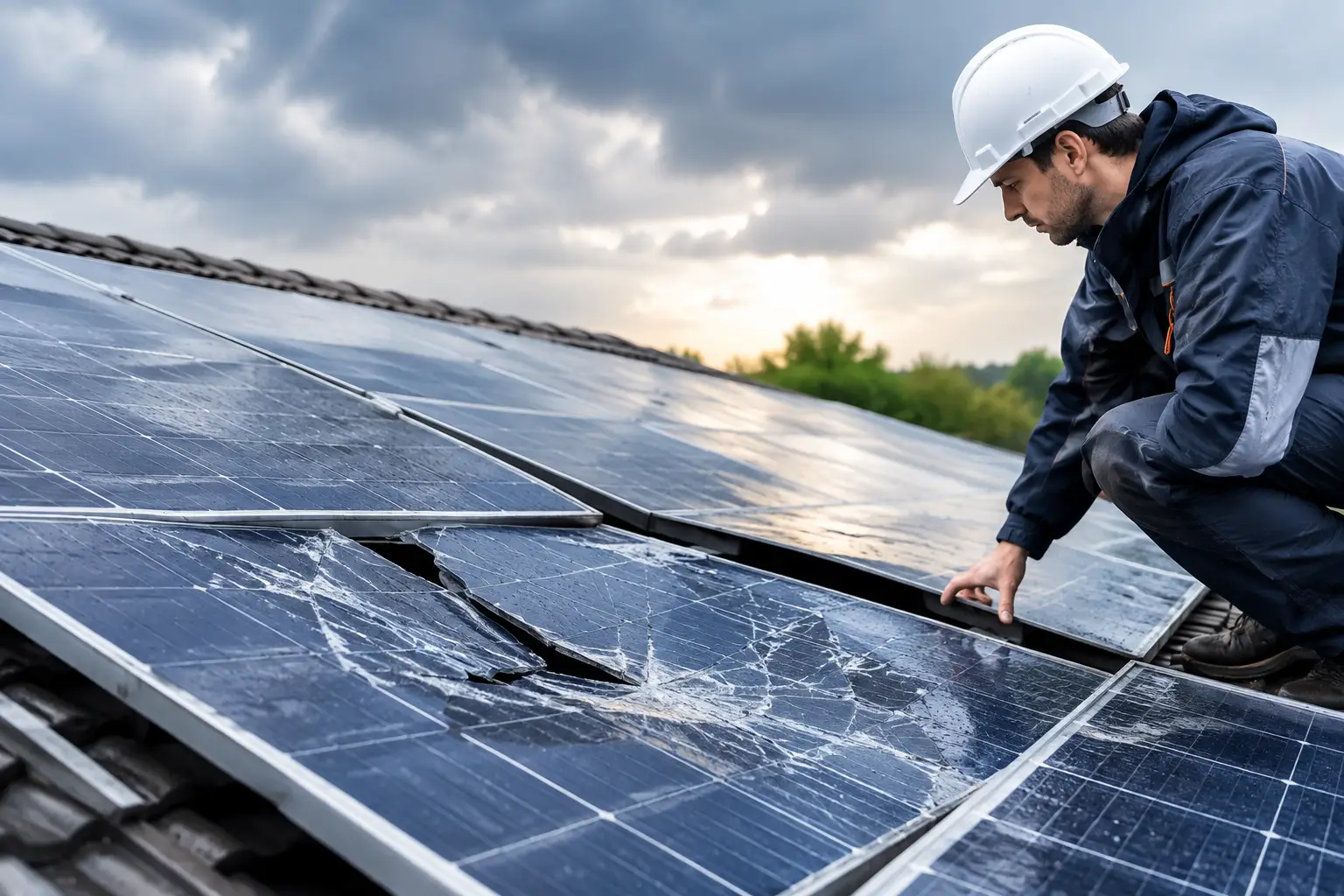
Hail can cause visible cracks in the glass, but sometimes small micro-cracks occur that you cannot see from the ground. A heavy branch can also damage the glass, the frame, or the back of a panel. A panel that looks intact at first glance may still produce less electricity.
Water is a second point of concern. Rain that gets under a damaged roof tile, around a roof penetration, or near a connector after the storm may only cause problems days later. Moisture can affect cable insulation or cause error messages on the inverter. That is why a quick check is more than just a visual inspection.
Voltage spikes also require attention. Lightning does not have to strike your home directly to damage electronics. A fault in the inverter, communication equipment, or monitoring can cause your system to shut down without you noticing immediately.
Check your yield and notifications
After the storm, open your inverter’s app or portal, if you have one. Check if the system is still registering production and if there are any error messages. Do not just compare the yield to a sunny day in summer. Instead, compare it with similar days and the same period in previous years, if that data is available.
Low yield does not automatically mean damage. Cloud cover, shade from fallen branches, or dirt can also play a role. However, a system that suddenly stops producing, performs significantly worse, or repeatedly fails deserves a technical inspection.
With professional monitoring, such deviations become visible more quickly. The production of your system is then tracked, and an unexpected shutdown is less likely to go unnoticed. This limits unnecessary loss of yield, especially when you do not check your inverter app daily.
When should you call in a technician?
In the case of visible damage, the answer is simple: have the system checked before using it normally again. But even without visible damage, an inspection is wise after very heavy wind, hail, or a lightning strike in your area, especially when your yield deviates or the inverter displays an error message.
A technician checks more than just the glass of the panels. They examine the support structure, mountings, cabling, connectors, roof penetrations, and the operation of the inverter. Where necessary, electrical measurements are taken. This clarifies whether the system can continue to operate safely, which parts need to be repaired, and if there is a risk of further damage.
This check also prevents a small problem from becoming larger. A loosened cable can chafe. A damaged connector can overheat. A shifted panel can affect water drainage or roofing. Early intervention gives you more certainty and helps protect the lifespan of your system.
Reporting damage to your insurance
Report potential storm damage to your insurer or broker as soon as possible. Whether solar panels are covered depends on your policy and the chosen guarantees. Often, permanently mounted solar panels are covered under home insurance, but conditions, deductibles, and exclusions vary.
Keep photos of the damage, note the date of the storm, and keep records of notifications from your monitoring or inverter app. Also, request a clear technical report of the inspection. This helps you demonstrate what is damaged and what repair is required.
Do not just have a damaged panel replaced without first determining the cause. If the mounting or cabling also shows problems, one new panel will not solve everything. A good repair addresses the damage completely, so your system works safely again and can produce at maximum capacity.
Cleaning is only useful after a safety check
After a storm, leaves, mud, moss, or twigs sometimes remain on the panels. This can restrict light. However, cleaning is not the first step when you suspect damage. First, it must be established that the glass, frame, mounting, and electrical parts are in order.
Only then can a professional cleaning help to remove residual dirt. Attempting it yourself with a hard brush, high-pressure cleaner, or aggressive product carries risks. You could damage the glass, the seals, or the anti-reflective coating. Moreover, you are working at height, often on a roof that is slippery after rain.
Prevent surprises during the next storm
You cannot stop a storm. You can, however, reduce the chance that damage goes unnoticed or leads to a long period of downtime. Regular inspection makes wear and tear on mountings, cables, and roof penetrations visible sooner. Especially for systems that have been in place for several years, this is a sensible form of preventive maintenance.
Bird protection can also make a difference. Bird nests and accumulated material under panels hold moisture and make inspection more difficult. Additionally, animals can damage cables. A tidy installation is not only more attractive but also easier to maintain safely.
For owners who want no technical hassle, maintenance and monitoring primarily offer peace of mind. You don’t have to judge for yourself whether a deviating yield is normal. Problems are picked up faster, and you can intervene specifically before the downtime increases.
At Solar Assistance, certified technicians work on existing solar installations throughout Belgium. After a storm, a targeted inspection can clarify what is needed, without unnecessary work. The goal remains simple: keeping your system safe, protecting the yield, and giving you peace of mind as quickly as possible.
Do you notice an error message, deviating production, or visible damage after a storm? Then do not wait until the problem gets worse. A quick, expert check gives you the best chance of a safe installation and less loss of solar energy.