


The future of predictive maintenance for solar panels
An inverter that underperforms for just a few hours isn’t always immediately noticeable. Yet, such a small deviation can translate into missed energy yields over several weeks. This is exactly what the future of predictive maintenance is about: identifying problems before your installation shuts down or loses efficiency.
For solar panel owners, this means greater certainty without having to constantly check graphs themselves. For businesses, it primarily means continuity, fewer unexpected interventions, and a better-substantiated maintenance budget. Predictive maintenance doesn’t replace a technician, but it does ensure they can intervene more purposefully and at the right time.
What predictive maintenance really means
With traditional maintenance, checks occur at fixed intervals, such as annually or following a report. This remains valuable. A visual inspection, cleaning, and technical check can uncover wear and tear or dirt that data alone doesn’t always show.
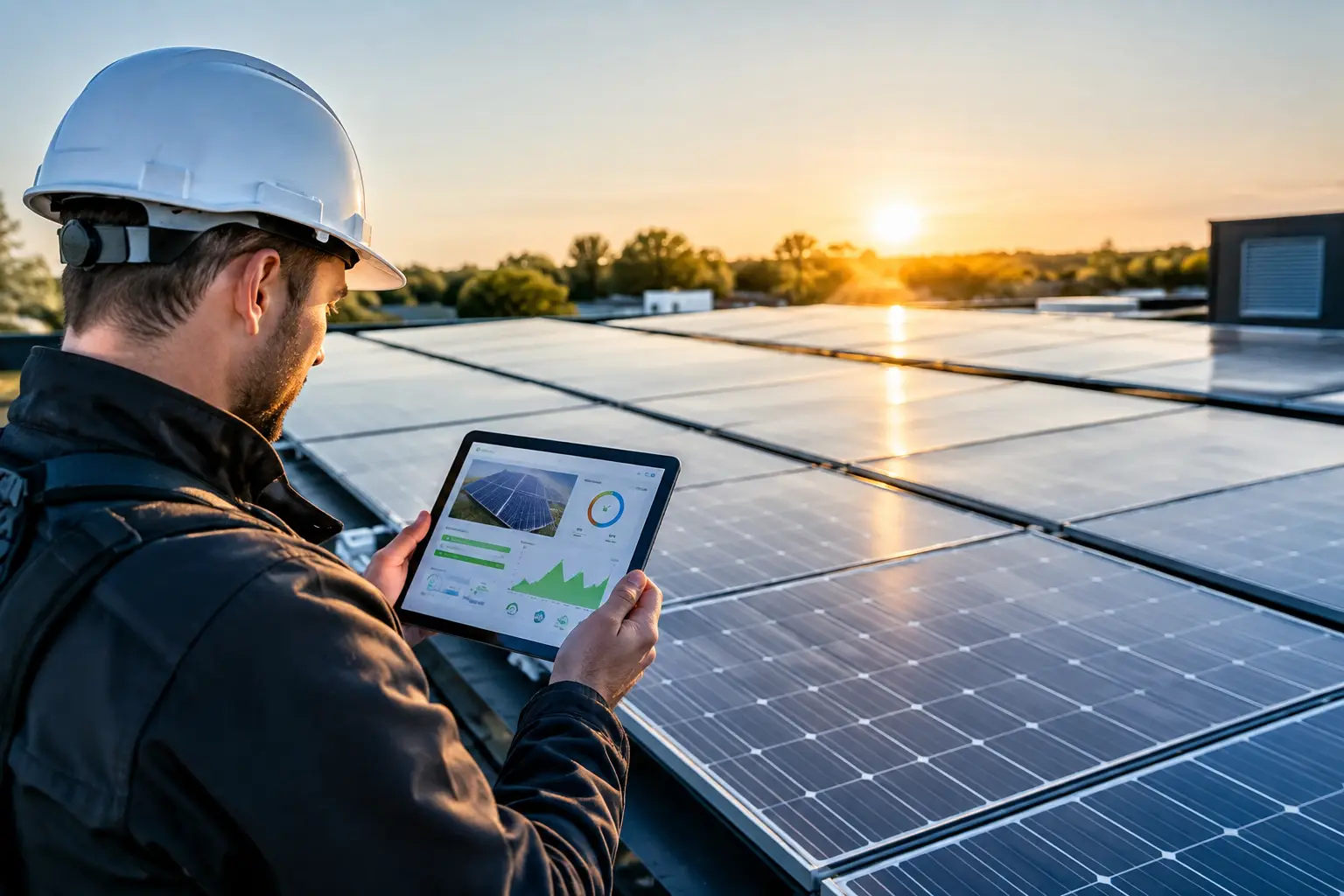
Predictive maintenance adds an extra layer to this. It uses data from your installation to signal deviations early. Think of production data per inverter or string, error messages, voltage values, temperatures, and the difference between expected and actual yield. Software and specialized staff compare this information with past performance and conditions such as solar radiation.
Is the production of one part of the installation dropping significantly more than expected? That is a reason to look further. Possible causes include dirt, emerging shading, a defective panel, a connector problem, or an inverter that isn’t working optimally. Not every deviation is an immediate defect. That is precisely why correct interpretation is important.
The future of predictive maintenance is both people and data
There is often talk of smart algorithms that automatically predict defects. While that technology is improving, a good approach remains more than just an automatic alarm. A notification without context sometimes leads to unnecessary concern or an intervention that yields little result.
The best results come from the combination of 24/7 data monitoring, clear threshold values, and technical experience. An expert assesses whether a drop in production is logical for the weather, location, or season. Action is only taken when a pattern deviates.
This is relevant for small residential installations, but even more so for larger roofs and solar parks. In a company with multiple inverters, a single fault can go unnoticed because the rest of the installation is still producing energy. Yet, the loss continues to mount every day. Rapid detection limits this silent form of yield loss.
From reacting to malfunctions to targeted prevention
The biggest change isn’t just in sensors, but in the way maintenance is planned. Instead of waiting for a malfunction, you can intervene when the first signals become visible. This reduces the chance that a small problem grows into prolonged downtime or higher repair costs.
For example, an inverter with recurring error codes can be further investigated before it fails completely. A string that structurally lags behind can be checked for damage, shade, or loose connections. And when production data indicates heavy soiling, you can schedule a cleaning based on efficiency rather than intuition.
This doesn’t mean every installation needs constant interventions. On the contrary. Predictive maintenance helps to act only when the data gives cause to do so. This way, you spend time and budget where the impact is greatest.
What early warning signals do solar panels give off?
Solar panels have no moving engine parts, but an installation consists of much more than just panels. Inverters, cabling, connectors, safeguards, and measuring equipment can all influence the yield. Many problems start with small signals.
A first signal is a drop in production that cannot be explained by less sun. Differences between identical strings can also require attention. Additionally, repeated error messages, short interruptions, deviating temperatures, and communication errors are relevant clues.
For installations on farms, logistics sites, and roofs with many birds, the environment also plays a role. Bird nests and dirt under or around the panels can affect performance and safety. In some cases, bird protection is therefore not an aesthetic choice, but a preventive measure to limit damage, dirt, and malfunctions.
A good monitoring solution collects these signals. But monitoring without follow-up mostly just provides more data. The real value is created when someone assesses the deviation, makes contact, and schedules a technician if necessary.
What will change in the coming years?
In the coming years, yield forecasts will become more accurate. Systems will learn better what an installation normally produces in specific weather conditions, per season, and per component. As a result, deviations will become visible faster and the number of false alarms will decrease.
The link with maintenance planning will also become stronger. When data indicates that a component likely needs attention, an intervention can be better prepared. The technician then doesn’t leave with a broad guess, but with a clearer picture of the possible cause. This saves time on-site and limits the duration of a malfunction.
For professional owners, reporting will become more important. It’s not just the total production that counts, but also questions like: which malfunctions occurred, how quickly were they handled, which actions protected the yield, and which risks require follow-up? This information makes operational management more transparent, especially across multiple buildings or locations.
For individuals, the essence remains simpler. You want to know if your installation is doing what it should and if action is needed. Good predictive follow-up should therefore not feel like a technical dashboard you have to decipher yourself. It should primarily provide peace of mind.
Data alone doesn’t protect your yield
Predictive maintenance also has limits. A monitoring platform can see that the yield is lagging, for example, but cannot always say with certainty why. A visual check on the roof may still be necessary to find damage, dirt, loose cabling, or mounting issues.
The quality of available data also plays a role. Not every older installation has the same measuring capabilities. Sometimes communication with the inverter is unstable or data per string is missing. In those cases, predictive maintenance remains possible, but less detailed. A technical inspection or a monitoring upgrade can then provide more insight.
Weather conditions also require nuance. A lower yield is not automatically a malfunction. Shade from new growth, temporary dirt from pollen, or an exceptionally warm period can affect efficiency. Therefore, an analysis must always take the full situation of your installation into account.
How to prepare your installation for smarter maintenance
Anyone wanting to benefit from predictive maintenance doesn’t start with complicated technology. The basis is an installation that is correctly registered, accessible, and trackable. Check if your inverter is still sending data and if notifications are reaching the right person.
Furthermore, do not neglect periodic maintenance. Cleaning, inspection, and technical checks complement data monitoring. An installation that is physically in good condition delivers more reliable performance and results in fewer unexpected problems. When there is visible dirt, recurring notifications, or an unexplained drop in production, waiting is rarely the best choice.
Also establish who takes action when an alarm occurs. This seems obvious, but many owners only discover during a malfunction that their original installer is no longer active or offers no service. A single independent point of contact for monitoring, maintenance, and technical assistance makes the difference between a quick solution and days of uncertainty.
Solar Assistance already monitors more than 10,000 installations and sees daily how small deviations can have major consequences if no one addresses them in time. With certified technicians and a response time of 48 hours for a reported intervention, follow-up becomes concrete: signaling, assessing, and targeted repair.
The most valuable question is therefore not which technology you will need tomorrow. Rather, ask if you already know today when your solar panels are performing less than they should. If the answer isn’t immediately clear, that is the first opportunity to better protect your yield and peace of mind.