


Interpreting a solar panels inspection report
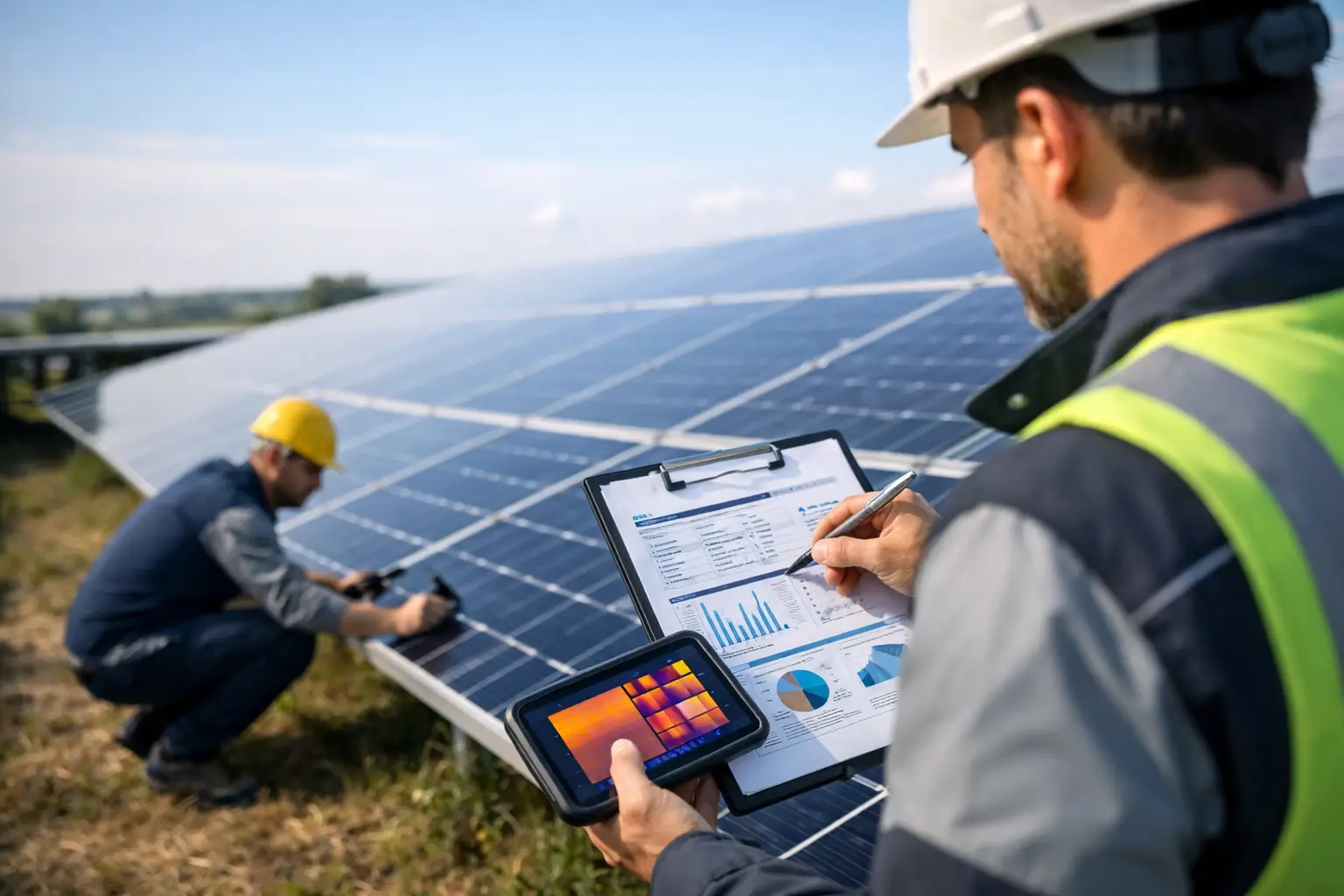
An inspection report may seem reassuring at first glance, even while your solar panels are yielding less than expected. Or it may be full of technical terms, photos, and scores without it being immediately clear what you should do with them. Interpreting a solar panels inspection report therefore doesn’t start with every detail, but with one question: is your installation operating safely and is it still delivering the yield you should expect?
A good inspection does more than just bring defects to light. It also helps you resolve small problems before they lead to loss of yield, downtime, or higher repair costs. Below you can read how to practically assess a report and when action is required.
Start with the basic details of the inspection
First, check which installation and which moment the report concerns. The address, the number of panels, the power of the inverter, and the inspection date must be correct. The type of inspection also makes a difference. A visual check of the roof, cabling, and panels is valuable, but tells you less about electrical performance than a measurement or an analysis of production data.
Also pay attention to the conditions. Were the panels checked after a period of heavy dirt, shade, or snow? Was the inverter active at the time of inspection? A snapshot is useful, but not complete proof of the yield over an entire year. That is why production data and a targeted check complement each other well.
Do you see an expected annual yield in the report? Then compare it with your actual production. Take into account the weather, changes in shade, and the year the installation was placed. A difference in yield does not automatically mean a defect. If the difference persists or grows larger, it deserves further investigation.
What do the scores and findings mean?
Many reports use colors, priorities, or terms such as compliant, point of attention, and deviation. This classification quickly makes it clear where the risk lies, but always read the explanation below it. An orange or red score without a concrete description is of little help to you. A solid report states what has been observed, where the problem is located, and what consequence it may have.
A green score usually means that no visible deviation was observed at the time of inspection. It is no guarantee that every component will continue to work problem-free for years. For example, a cable may be visually fine but later show wear due to movement, heat, or rodents.
With a point of attention, the severity is often limited, but postponement is not always wise. Think of early-stage soiling, loose cable clips, or slight discoloration around a connector. If you have this addressed in time, you prevent a small repair from growing into a malfunction.
A serious deviation does require quick follow-up. This could involve damaged cabling, water ingress, loose panels, grounding errors, or an inverter that regularly fails. In that case, it’s not just yield at stake. The operational reliability and safety of your installation then deserve immediate attention.
Assess safety, technology, and yield separately
Not every defect has the same impact. A practical way to read an inspection report is by placing the findings into three groups.
Safety issues require priority. Damaged cable insulation, exposed connections, traces of overheating, and grounding problems are included in this. Do not wait for the next maintenance moment for these.
Technical defects can affect the lifespan or operation. Examples include an outdated inverter, poorly secured cables, moisture in a junction box, or panels under tension due to an installation error. Not every technical point is urgent, but do ask what follow-up is needed and by when.
Yield problems are sometimes less visible. Soiling, new shade from trees, defective optimizers, or one weak panel can depress production without the installation failing completely. That is exactly why it is useful to place inspection results alongside your production graphs.
Photos in the report: evidence, not decoration
Photos make an inspection report much more useful. They show whether a finding is local or occurs in multiple places. Ask yourself with every photo: what do I see, where is it located, and what is the consequence if this is left as is?
Dirt on a panel, for example, is not always purely aesthetic. A layer of dust, bird droppings, or moss can block light and cause localized heat. Particularly stubborn soiling deserves attention. Periodic professional cleaning of solar panels can then help to limit unnecessary yield loss, without risk of damage from the wrong agents or pressure.
Photos of cables are at least as important. Cables should be firmly secured and not rub against roof tiles, sharp edges, or water drainage. Hanging cables can become damaged over time. Do you see nests, droppings, or material under the panels? Then bird protection can be a preventive solution. Birds can damage cables and cause soiling, with consequences for yield and maintenance.
Interpreting a solar panels inspection report in case of low yield
A report may indicate that the installation seems technically fine, while your production lags behind. Then it makes sense to look further than the visible check. First, compare the same months with previous years. One weak month says little. A recurring difference during sunny periods is more relevant.
Next, check if there are changes around your home. A grown tree, a new dormer, a chimney in the shade, or even a neighboring building can change the production pattern. Shade does not always affect all panels equally. Depending on the setup, one slightly shaded panel can influence the performance of a larger part of the installation.
An inverter also does not work indefinitely. Notifications, short periods of downtime, and lower peak performance are signals to take seriously. If your inverter regularly registers an error code, a report stating only ‘no visual damage’ is insufficient. In that case, the error history and electrical measurements are needed to find the cause.
With monitoring of solar panels, you see such deviations faster. Production is not just viewed in hindsight but followed structurally. That gives more certainty than occasionally looking at a total reading yourself. The earlier a drop is noticed, the smaller the chance of long-term downtime.
Translate advice into concrete action
The recommendations at the back of the report are often the most important part. Unfortunately, they sometimes remain too general, with formulations such as ‘follow up’ or ‘repair if necessary’. In that case, ask for clarity. Useful advice tells you what needs to happen, why it is necessary, how urgent it is, and what the effect on safety or yield could be.
You don’t have to have every point of attention carried out immediately. That depends on the severity, the age of the installation, and the chance that the problem will worsen. A small fix can wait until planned maintenance. In the case of moisture, burn marks, damaged connectors, or recurring inverter malfunctions, waiting is rarely wise.
Also take accessibility into account. If a technician has to be on your roof for a repair anyway, it can be efficient to address other findings at the same time. That doesn’t always lower the cost per component, but it does prevent multiple interventions and extra interruptions.
Ask these questions if the report remains unclear
A technical report should help you decide. If you don’t get a clear answer, ask at least this: is the installation safe to use, does this finding affect the yield, which action has priority, and how do you check if the problem has truly disappeared after repair?
For larger works, also ask for the measurements taken and photos after the intervention. This way you have a clear file for yourself, any insurance, or a later sale of your home. Additionally, keep the inspection reports, invoices, and production data together. This history makes it easier to recognize recurring problems and gradual yield decline.
Don’t wait for an error message
An inverter that is still glowing green is no proof that every panel is performing optimally. Many problems arise gradually and remain unnoticed for a long time. Preventive maintenance helps to check fixings, cabling, soiling, and technical components in time. That gives peace of mind and helps your investment perform longer.
In case of an unclear report or a finding with potential impact, an independent second look is often wise. Solar Assistance combines inspection, monitoring, and technical assistance to follow up on problems in a targeted way, even when the original installer is no longer reachable.
So don’t put an inspection report in a drawer just because the colors are mostly green. Use it as a practical action plan: resolve urgent risks quickly, plan preventive works, and continue to monitor your yield thereafter. That way, your installation keeps doing what it was intended for: producing reliable energy for years with as little worry as possible.