



When is a PV inspection required in Belgium?
An inverter that runs smoothly does not automatically mean that your solar panels are also administratively and electrically in order. When is a PV inspection required? Primarily before you put your installation into use, but also during certain modifications. A timely inspection prevents your installation from being denied connection, a file from getting stuck, or a technical problem from going unnoticed.
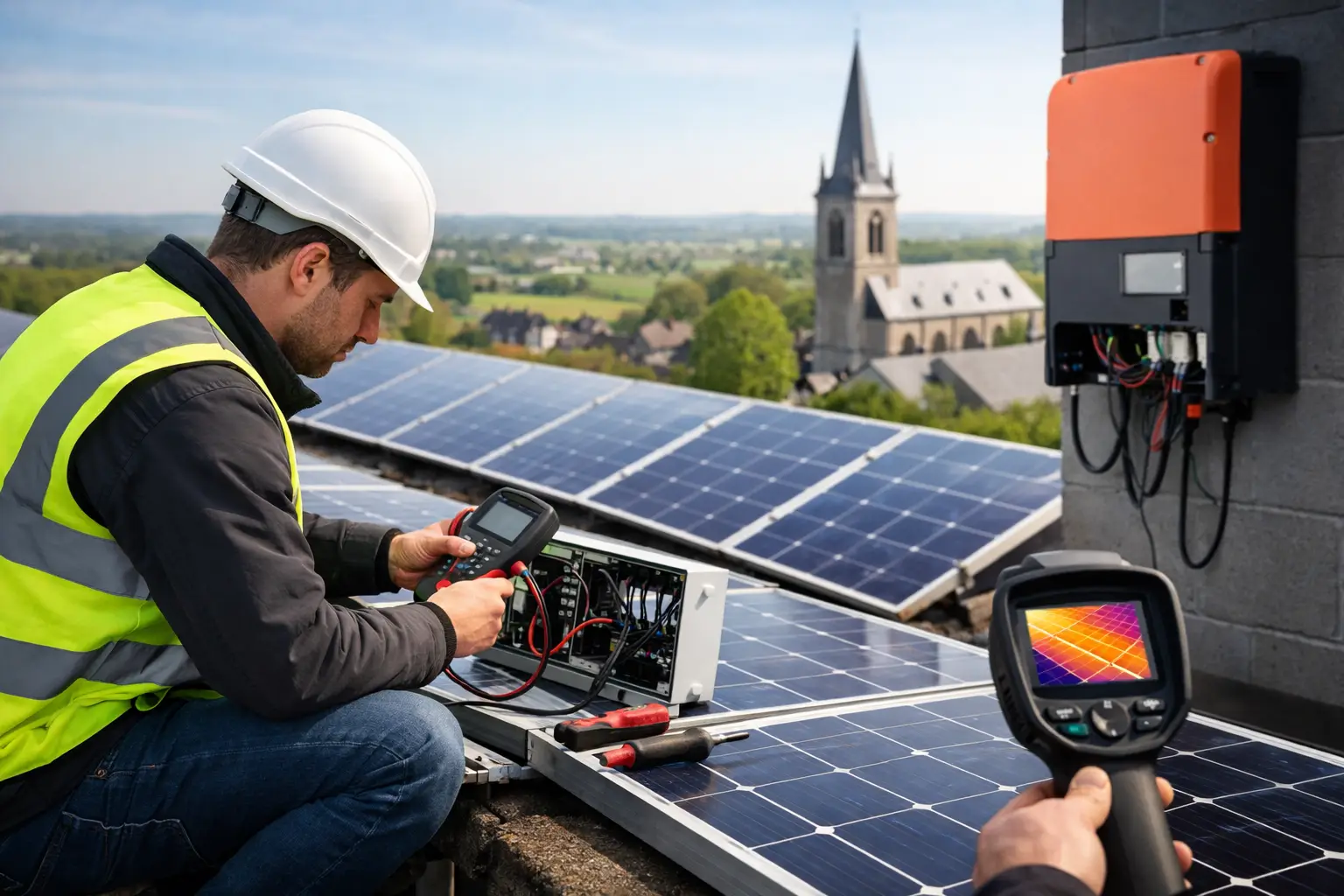
A PV inspection is not a check of the yield itself. An accredited inspection body assesses whether the electrical installation is safe and complies with the Belgian AREI rules, the General Regulations on Electrical Installations. This includes cabling, protections, grounding, switches, and the inverter connection. This gives you the certainty that your installation can operate safely and is correctly connected to the grid.
A PV inspection is required before commissioning
If you have a new solar panel installation installed, an inspection is mandatory before final commissioning and connection to the distribution grid. The installation must therefore first be technically finished correctly. After that, an accredited inspection body carries out the inspection and you receive an inspection report.
You need that report for your grid operator. Without a positive report, administrative processing may be delayed or the connection cannot be confirmed. With a digital meter and injection into the grid, this is extra relevant: you want to avoid your solar panels being ready but not yet allowed to supply power because a document is missing.
The inspection is not a formality that you should just check off as quickly as possible. It checks, among other things, whether the correct circuit breakers and residual current devices are present, whether the grounding is in order, and whether the cabling is safely installed. Small errors are often easy to repair before the inspection. After a rejection, it usually costs more time, a new appointment, and potential loss of yield due to delay.
When is a PV inspection required again?
A new PV inspection may also be necessary for an existing installation. The most important rule is simple: if you make significant changes to the electrical installation, you must check in advance whether a reinspection is mandatory. Not every small intervention requires the same, but a change to the protection, the connection, or the power capacity always deserves a professional assessment.
You are expanding the installation
Are you installing extra solar panels or adding a second inverter? Then the power capacity and often the electrical connection change. In that case, an inspection is usually required before the expansion goes into service. The installation as a whole must continue to function safely. An existing fuse box that was sufficient years ago is not automatically still so.
Even if you switch to a more powerful inverter, a check is wise and often mandatory. The cable cross-section, protection, and settings must match the new power capacity. An expansion that only looks good on paper can lead to malfunctions, shutdowns, or overloading in practice.
You are replacing the inverter
Replacing a defective inverter with an equivalent device is not always the same as a complete change to the installation. Still, much depends on the situation. Does the power capacity, the type of connection, or the location in the electrical installation change? Then a new inspection may be required.
Therefore, have exactly what is changing checked before the replacement. This prevents discussion afterwards with the grid operator, insurer, or inspection body. Moreover, an inverter replacement is a logical time to check the entire installation. Loose connectors, outdated protections, or traces of moisture otherwise easily fall out of view.
You are installing a home battery
A home battery is a separate electrical expansion. It communicates with your inverter, the meter, and sometimes with an emergency power supply. As a result, the operation of your installation changes significantly. In most cases, the modified installation must be reinspected before commissioning.
This certainly applies if new circuits, protections, or switching facilities are installed. With batteries, correct installation is extra important. You not only want maximum self-consumption, but also safe operation during power outages, peak loads, and maintenance.
You are modifying the fuse box or connection
Are you replacing the distribution box, adding circuit breakers, or changing the connection to the grid? Then that directly affects the electrical safety of your PV installation. The solar panels themselves do not have to move to make a reinspection necessary.
This is a point where owners often make a mistake. A solar installation does not only consist of panels on the roof. The inverter, cabling, protection, and distribution box together form one system. A change in the box can therefore have consequences for the entire installation.
Periodic inspection: when does it apply?
In Belgium, a periodic inspection of the electrical installation generally applies to homes. For private low-voltage installations, this is usually every 25 years. Your solar panels are then included in the general assessment of the electrical installation, insofar as they are part of that installation.
For companies, farms, and other non-household locations, stricter and more frequent inspection obligations often apply. The type of building, the electrical installation, and the business activities play a role there. A periodic inspection is not just for regulations. It also helps to detect wear, poor connections, and safety risks before they lead to downtime.
Do not wait solely for the mandatory term if your installation shows abnormal behavior. An inverter that regularly fails, an error message about insulation, or a noticeably lower yield requires a technical check. An inspection does not replace targeted maintenance or troubleshooting, but it can show whether the electrical basis is still correct.
An inspection is different from maintenance and monitoring
A positive inspection report is a snapshot. It confirms that the installation meets the requirements at the time of inspection. It does not automatically tell you whether every panel is performing optimally, whether the inverter will have a malfunction tomorrow, or whether dirt, shade, and bird protection are affecting your yield.
That is why inspection, preventive maintenance, and monitoring complement each other. With continuous monitoring, you can see more quickly when the yield deviates from what you should expect. A malfunction then does not go unnoticed for weeks while your installation produces less. For owners who want certainty about their daily yield, that is often more valuable than just relying on an old inspection report.
Regular maintenance also helps to address problems before a next inspection. Think of damaged cabling, loose parts, dirt around the inverter, or damage by birds. Especially with installations that have been running for years, this preventive approach protects your investment and extends the lifespan of crucial components.
How to prepare well for the inspection
Good preparation limits the risk of rejection and avoids unnecessary delay. Ensure that the installer or technician has the necessary documents ready. For a new or modified installation, this usually involves the single-line diagram, situation diagram, technical data of the inverter, and information about the protections used.
Also check whether the inverter is easily accessible and whether the fuse box remains freely accessible. An inspector must be able to assess the components safely. Has a report been made before? Keep that together with invoices, diagrams, and warranty documents. That makes later repairs, expansions, and insurance files a lot easier.
Before the appointment, pay particular attention to these five points:
- The installation is completely finished and all covers are in place.
- The inverter, distribution box, and disconnect switches are safely accessible.
- Diagrams and technical documents are available and up to date.
- The grounding and protections have not been modified without the diagrams being updated.
- Any error messages or visible damage have been investigated beforehand.
What if your PV inspection is rejected?
A rejection does not immediately mean that your installation is unsafe or worthless. Often it concerns specific points that can be resolved, such as a missing label, an error in the diagram, insufficient protection, or an incorrect connection. The report states what needs to be adjusted.
Address those points specifically and have the repair carried out by a qualified technician. Do not just ask to solve the problem, but also to check why it arose. If a connection is loose or a protection is not correctly chosen, you want to be sure that the rest of the installation has been thoroughly checked.
Especially with older installations where the original installer is no longer reachable, an independent technical check gives peace of mind. You don’t have to figure out for yourself which parts belong together or which documents are still missing. A clear technical assessment brings your installation back into focus and helps to prevent further downtime.
A PV inspection is therefore the right starting point when your solar panels are new, are being expanded, or are being electrically modified. But even after that, keep looking at what your installation is actually doing. Those who have deviations investigated quickly protect not only safety but also every kilowatt-hour that their solar panels can produce.