


9 signs of hidden yield loss
An installation can continue to produce power and yet yield less than it should. This is exactly what makes signs of hidden yield loss so deceptive. You don’t see a completely black screen, but you are missing out on yield without noticing it. Therefore, do not only compare your production with a sunny day from last year. Look especially for an unexpected drop, differences between panels, or recurring messages from your inverter.
An inverter converts the direct current from your solar panels into usable alternating current for your home. If something goes wrong there, you sometimes notice it immediately. However, it often happens gradually. Dirt, shade, loose cabling, a fault in a component, or a communication problem can reduce your efficiency while the installation appears to be working normally at first glance.
Recognizing signs of hidden yield loss
Hidden yield loss does not automatically mean there is a major defect. Sometimes the explanation is logical, such as longer shadows from grown trees or exceptionally gloomy weather. But if the drop does not match the season, the weather, or your consumption, a check is wise. These are the signs that owners miss most often.
1. Your production is noticeably lower than in comparable periods
A comparison only has value if you compare the same periods. For example, compare April of this year with April of last year, and take the weather into account. One cloudy week says little. Lower production that persists for weeks or months deserves attention.
Also look at the pattern. If the yield drops suddenly, there may be a malfunction. If it slowly fades away, then dirt, increasing shade, or wear and tear sometimes play a role. It is best to have the cause safely checked by a technician.
2. The inverter gives a message, even if it is still working
An error code on the inverter or in the app is not always a complete failure. Some messages point to a temporary problem. Others show that part of the installation is not performing optimally. Do not just clear such a message without knowing what it means.
Note the message or take a photo of the screen. This allows a technician to more quickly assess whether it concerns communication, grid voltage, cabling, or a technical component. With an inverter problem, your production can stop completely, but it can also continue partially. The latter is less likely to be noticed quickly.
3. Some of your panels perform differently than the rest
Panels are usually linked in a string. A string is a series of solar panels connected together to one input of the inverter. If one string produces less, it could indicate shade, dirt, a connector problem, or a defective panel.
Not every installation shows the yield per string in an app. Monitoring can make that distinction visible. This information is particularly useful for larger roofs or panels facing different directions. Your total production may still seem reasonable, while one part of the roof is gradually falling behind.
4. You see recurring short interruptions
Some installations do not fail for days, but stop regularly for short periods and then restart. This can happen when the grid voltage rises too high, when there is a problem with the inverter, or when a connection is unreliable.
Short interruptions are rarely seen on your electricity bill. In the production graph, however, they stand out as gaps or sharp dips during sunny moments. Those who do not look regularly can easily overlook these signals.
5. The app or portal no longer shows recent data
No current data does not always mean your solar panels are not producing power. Sometimes only the connection between the inverter and the monitoring has been lost. Still, this is not a detail to ignore. Without data, you no longer know if the installation is actually performing.
A communication problem can therefore hide a technical problem. Check if the last recorded production is still recent. If the information continues to lag, have it checked to see what is going on.
6. Bird droppings, leaves, or stubborn dirt remain
A thin layer of dust does not always have a major effect. Localized dirt can have a heavier impact, especially when dirt accumulates along the edge of a panel or when bird droppings cover part of the cells. Leaves can also cause shade at certain times.
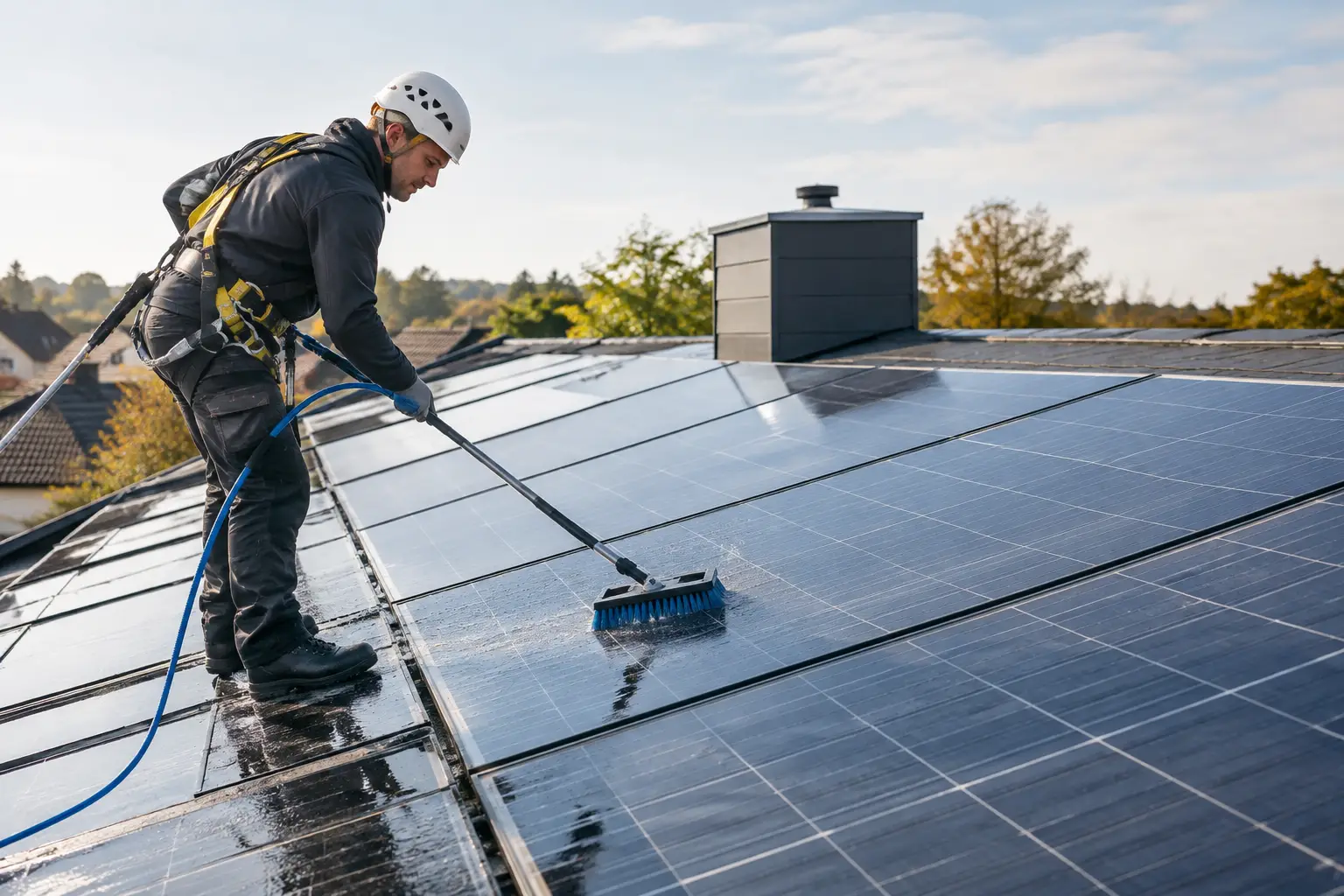
Look at your roof from a safe place. If you see clear dirt or many birds around the panels, then targeted cleaning or bird protection can help. Do not go on the roof yourself and do not work on the panels or cabling. This brings risks and does not always solve the technical cause.
7. Shade has changed since installation
A tree grows, a dormer is added, or a neighboring building changes. An antenna, chimney, or drain can also cast more shade at certain hours than before. A small patch of shade can have a larger effect than you expect, depending on how the panels and strings are connected.
Pay particular attention to production that drops at the same time. If the graph suddenly drops every morning or afternoon, shade could be a possible explanation. A technician can assess whether shade is indeed the cause and what solution is realistic.
8. Your consumption is rising, but your self-consumption feels lower
A higher energy bill does not immediately prove that your solar panels are producing less. Perhaps you are using more electricity, your family situation has changed, or appliances are being charged more often during the day. Still, it can be a reason to compare production and consumption.
If you see that your installation delivers less on sunny days than before, further investigation is useful. A good overview prevents you from confusing a technical problem with a changed consumption pattern.
9. You actually never look at the yield anymore
This is the most common signal. Many owners check the app right after installation and hardly ever after that. Understandable, because solar panels are supposed to just work. But according to our own figures, a malfunction remains unnoticed for an average of seven months. During that period, yield loss can continue to accumulate.
What do you do in case of suspected yield loss?
Start with the information you can safely view: the production graph, the status of the inverter, and any error codes. Compare a longer period, not just one single day. Then see if there is a clear reason, such as new shade or visible dirt.
If the cause remains unclear, contact a service partner. A technician can technically measure the installation and search specifically for the cause. That is different from just confirming that the inverter is still on. The goal is to determine if every part of your installation is doing what it should do.
Solar Assistance helps owners throughout Belgium, even when your original installer is no longer available. In case of urgent malfunctions, we are on-site within 48 hours. We provide a 100% guarantee on performed works.
Monitoring prevents small problems from dragging on for a long time
Those who do not want to monitor their yield themselves can choose a solar plan. With Solar EYE, you get monitoring and a notification when there is a problem. You then contact us yourself to schedule an intervention. This is suitable if you like to decide for yourself what happens after a notification.
Solar COMFY goes further. This plan combines monitoring with annual cleaning and technical inspection, all-risk insurance, and priority for interventions. In the event of a malfunction, we contact you ourselves and arrange the further follow-up. This provides peace of mind if you don’t want to check your app every time or can no longer rely on an installer.
Frequently asked questions about yield loss
Is a lower yield in winter always a problem?
No. Shorter days, a lower sun position, and more cloud cover naturally result in less production in winter. Therefore, always compare with the same period of a previous year and look for unexpected deviations within that seasonal pattern.
Are my solar panels still working if the inverter light is green?
Usually, a green status indicates that the inverter is active. That does not always mean that all panels and strings are performing optimally. A partial failure, dirt, or shade can still cost yield.
Should I have panels cleaned if I see less yield?
That depends on the cause. Visible bird droppings, accumulation of dirt, or leaves can be a reason. If there is a malfunction, shade problem, or defective component, cleaning will not solve it. First, have it assessed what exactly is going on.
If you see a drop that you cannot explain, do not wait until next summer. Call 02 828 90 01 or use the contact form to have your installation specifically checked.