



Case study: inverter upgrade with higher yields
A case study of an inverter upgrade quickly makes it clear why an old inverter deserves more attention than many owners think. Solar panels can continue to function well for years, while the inverter gradually becomes the weak link. It converts the generated direct current into usable alternating current. If it fails or performs poorly, your yield drops immediately.
An upgrade is therefore not just about replacing a device. It is about the continuity of your installation, reliable follow-up, and avoiding unnecessary production losses. Especially for installations that have been running for ten years or longer, a timely analysis can prevent many worries.
Case study: inverter upgrade for an existing installation
A homeowner in Flemish Brabant had twelve solar panels installed in 2013. The installation worked for years without visible problems. No error messages appeared on the inverter’s digital screen, and the panels looked fine. Nevertheless, the owner noticed that the annual production had been lower than expected for several years.
The cause only became clear after a technical check and comparison with historical production data. The inverter was frequently cutting out for short periods, especially on hot days. These interruptions were barely visible to the owner. By the time he checked the app, the device was usually working again. But every interruption meant missed solar energy.
Furthermore, the inverter was technically outdated. Parts were difficult to obtain, and the existing monitoring provided little detail. As a result, no one could quickly see when the installation was temporarily down, how long it lasted, and what the effect on the yield was.
The solution was not a rushed replacement. First, it was checked whether the cabling, the solar panels, and the safety devices were still in good condition. The production per panel string was also checked. Only when it was clear that the inverter was the limiting factor was an upgrade proposed.
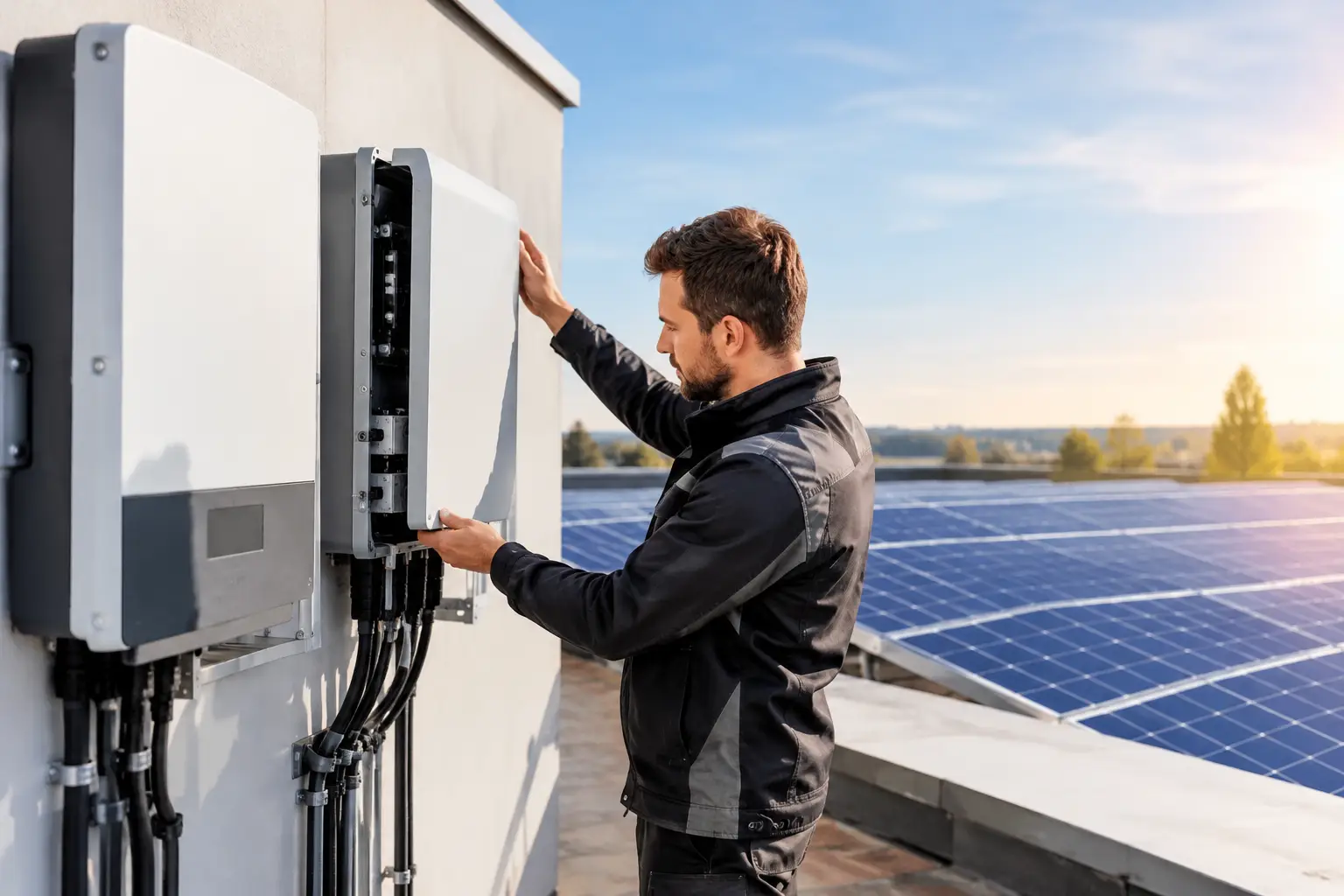
The new inverter was matched to the capacity of the existing panels and the home’s consumption profile. After installation, the system was retested, correctly configured, and linked to monitoring. The owner not only received a new device but also gained better insight into his installation.
What changed after the upgrade?
The biggest improvement was not just the production on sunny days. The installation primarily became more reliable. The old, short outages disappeared, and deviations could be noticed faster. Through active follow-up, you don’t just see after the fact that an installation has produced less; you can react as soon as something deviates.
That is the difference between noticing a fault and managing a fault. Those who only occasionally look at the yield often miss small interruptions. Individually, these seem limited, but they can add up over an entire season. With professional monitoring of solar panels, it becomes easier to track performance and have problems investigated more quickly.
The owner also opted for periodic maintenance. This makes sense: a new inverter works best within an installation that is checked as a whole. Connections, switches, cabling, and safety devices deserve as much attention as the device itself. Good maintenance of solar panels helps to detect risks early and protect the lifespan of the installation.
When is an inverter upgrade wise?
An inverter does not have a fixed replacement date that applies to every installation. However, age is an important signal. Many devices approach a phase after ten to fifteen years where the chance of malfunctions increases. This does not mean you must automatically replace it as soon as that limit is in sight. A well-functioning inverter with a stable yield does not need to be discarded preventively.
An upgrade is worth considering when production drops for no clear reason, error messages recur, or the inverter regularly shuts down. Limited availability of parts can also be a reason. If a repair becomes uncertain, expensive, or slow, a replacement can offer more certainty than continuing to repair.
For some installations, a change in the family situation also plays a role. You might be using more electricity due to a heat pump, charging station, or working from home. In that case, a new inverter with better measurement capabilities can help to better align production and consumption. This does not automatically increase the yield of your panels, but it does give you more control over your own energy.
A higher yield is not always guaranteed
An inverter upgrade can resolve production loss, but it is not a miracle cure. If the panels are dirty, shaded, or have a technical problem, a new inverter alone will not fix that. That is why a preliminary check is so important.
Dimensioning also requires attention. An inverter that is too small can clip power during peak production moments. An inverter that is too large is not always a good choice either. It may operate less efficiently at lower production levels and carries a higher cost without a proportional benefit. The right choice depends on the panel capacity, roof orientation, cabling, and the technical condition of the installation.
With an older installation, there may also be administrative points of attention. Think of documents from the original installation, any inspections, or data required for your insurer. Therefore, keep invoices, technical data sheets, and reports carefully. Help with administration regarding solar panels can be useful when you are not sure which documents are needed.
This is how a well-considered upgrade works
A reliable upgrade starts with measuring, not with selling. A technician first looks at the error messages, the production history, and the condition of the current installation. This is followed by a technical inspection of the inverter, the connections, the distribution box, and the solar panels.
Next, it is determined whether repair is still worthwhile. Sometimes replacing a part or correcting a connection is sufficient. In other cases, a new device is the most sensible choice, especially when the old inverter fails repeatedly or can no longer be properly monitored.
When replacing, correct commissioning is essential. The settings must match your installation and the electricity grid. Afterward, you test the production and check if the monitoring is sending the correct data. Without that final step, it remains difficult to monitor performance in the long term.
For owners, a clear report is valuable. You want to know what was found, what work was carried out, and what you can monitor yourself. Transparency prevents doubt and makes future interventions faster because the technical history remains available.
Prevention avoids long downtime
In this case study, the problem was solved before the inverter failed completely. This allowed for a planned visit, without weeks of uncertainty about repairs or parts. It is precisely this preventive approach that keeps an installation profitable.
Therefore, do not wait until the screen remains completely black. Regularly compare your yield with previous years and watch for error messages, unexpected zero production, or clear differences between sunny days. If you see a deviation, have it assessed in time. Prompt technical assistance for solar panels limits the chance that a small defect grows into long-term downtime.
An inverter upgrade is only truly successful when you not only produce energy again afterward but also know that your installation is being actively monitored. That gives more certainty, fewer worries, and a better basis for maximum energy yield in the years to follow.