



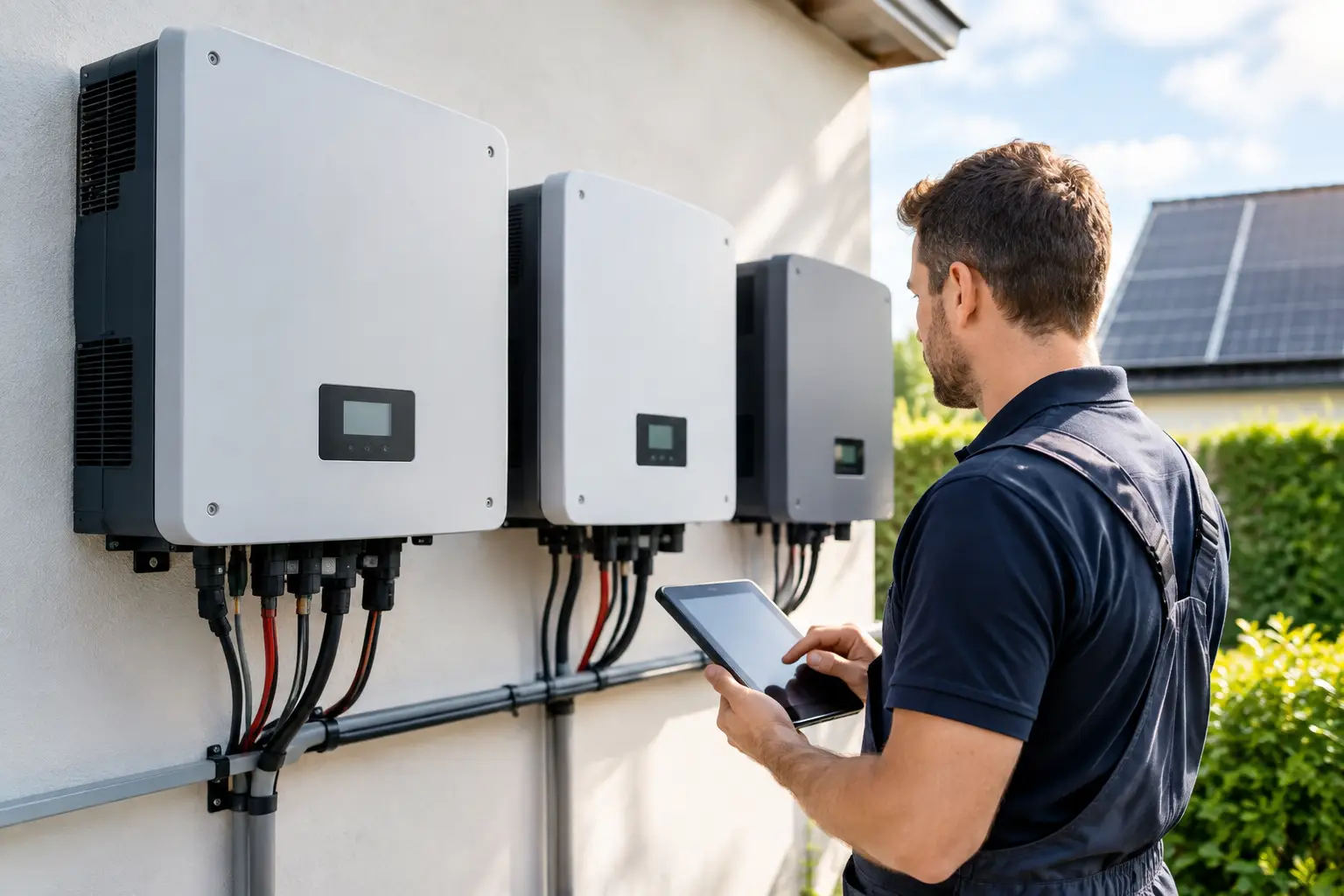
Comparing inverter brands for serviceability
An inverter that fails often shuts down more than you think. Your solar panels may be in perfect condition, but without a working inverter, they produce no usable power. Anyone who takes comparing inverter brands for serviceability seriously looks beyond the purchase price, power output, and warranty period. The main question is: how quickly do you get help if something goes wrong?
Why serviceability helps determine your yield
The inverter converts the direct current from your solar panels into alternating current for your home or business. It is also the component that most frequently requires attention during the lifespan of a solar installation. An error message, poor communication with the app, a faulty fan, or a problem with a network connection can cause your yield to drop unnoticed.
With a cheap device, the purchase price is sometimes more attractive. But if you have to wait days or weeks for a response, parts, or approval during a malfunction, that price difference quickly becomes less interesting. Especially with larger installations, downtime can be directly felt on your energy bill or business results.
Serviceability is therefore not just about a helpdesk. It is about the entire journey from problem to solution: a clear diagnosis, access to technical data, available spare parts, a correct warranty procedure, and a technician who knows the device. That determines how much peace of mind your installation gives you.
Comparing inverter brands on serviceability: look beyond the warranty
A long product warranty sounds reassuring, but it is no guarantee of a quick repair. Therefore, do not just look at the number of warranty years. Also ask what happens in practice when your inverter shows a fault.
With some brands, every request goes exclusively through the original installer. This becomes difficult when that company no longer exists, does not respond, or does not offer a service contract. Other brands work with an accessible service portal where an independent technical partner can open a case. For owners of older installations, this difference is particularly valuable.
Also check whether a brand provides a repair, a replacement device, or only compensation in the event of a defect. A replacement device is often the best solution, but only if it is delivered quickly and installed correctly. A warranty that requires a lot of administration and provides little clarity does not automatically limit your yield.
The accessibility of technical support
A good service line is more than a general customer number. Technical support must be able to interpret error codes, read log data, and provide concrete steps. This speeds up the diagnosis and prevents unnecessary technician visits.
Pay attention to the language, opening hours, and response time. A response in English is not a problem for some owners. But when your installation is down, you especially do not want to wait days for a reaction or provide the same information over and over again.
Local stock and spare parts
A brand can be technically strong but less practical if replacement devices have to come from far away. Availability in Belgium or through a European distributor makes a big difference. The same applies to specific parts such as communication cards, fans, optimizers, or connection modules.
Not every defect requires a completely new device. When individual parts are available, a targeted repair can be cheaper and more sustainable. However, for some older models, parts are scarce. In that case, repowering, where you replace outdated components with a suitable new system, is sometimes the wisest choice.
Monitoring makes service faster and more preventive
Many inverter problems announce themselves before the device fails completely. Production drops abnormally, a string delivers less, or the connection to the portal drops out regularly. Without follow-up, you sometimes only discover this months later when you look at your annual statement.
With professional monitoring, you see production problems faster. This allows for a targeted intervention before a small problem leads to long downtime. A deviation is not always a defect. Shadow, dirt, a power interruption, or a change in your consumption can also be an explanation. The right interpretation prevents unnecessary costs.
When choosing an inverter brand, therefore, check how well the monitoring platform works. Can data be read remotely? Are error messages clear? Does historical data remain available? And can a service partner gain access if you have no technical knowledge yourself? A nice dashboard is pleasant, but reliable alerts and usable diagnostic information are more important.
For an installation that is actively followed up, solar panel monitoring is a practical way to detect yield loss faster. This way, you don’t have to check production curves yourself every day.
Points of attention for existing and older installations
If you already have solar panels, you don’t always have a free choice of a new brand. Perhaps your inverter is still fine, but the original installer has disappeared. Or your current device no longer fits an expansion, home battery, or charging station. In that case, compatibility is at least as important as the brand name.
Ask in advance if a new device can work with your existing panels without major adjustments. The number of panels per string, the voltage, and the power must be technically correct. Incorrect sizing can lead to lower yield, error messages, or a shorter lifespan.
Administrative matters also deserve attention. In the event of a replacement, settings, measurement data, and sometimes documents for the grid operator or insurance must be correctly updated. Therefore, keep invoices, serial numbers, commissioning reports, and warranty certificates. This makes a service request much easier later on.
If your documents are missing or you don’t know what steps are needed, administrative assistance for solar panels can prevent unnecessary delays.
Which service questions should you ask before you decide?
You don’t have to be a technical expert to evaluate a brand well. Simply ask the supplier or service partner concrete questions. Who handles a malfunction if the original installer is not reachable? Can a technician view error codes and production data remotely? How quickly is a replacement device usually available? And what costs fall outside the factory warranty, such as travel, diagnosis, labor hours, and reprogramming?
Also ask who is responsible for the complete solution. A manufacturer can replace the device, but someone must also safely dismantle, install, configure, and re-register it in the monitoring. If that responsibility is fragmented, a simple intervention often takes longer than necessary.
For companies, reporting and scalability are extra relevant. A facility manager does not want to find out separately for each location which brand, password, or installer is involved. A central overview, fixed contact person, and clear intervention agreements provide more continuity.
Price, brand, and service: the right balance
There is no brand that is the best choice for every installation. For a simple residential installation, a solid device with accessible support may be sufficient. For a large roof, a company with high daytime consumption, or an installation linked to batteries and charging infrastructure, monitoring, parts stock, and intervention speed carry more weight.
Therefore, look at the total cost over the lifespan. A slightly higher purchase price can be justified if it gives you an accessible platform, clear warranty handling, and smooth technical support. Conversely, a well-known brand is not automatically the best choice if no one can help you locally.
Preventive solar panel maintenance also helps to keep not only the inverter but the entire installation in good condition. During a check, connections, cabling, error messages, and production data can be inspected before they cause major problems.
When your inverter gives an error, do not wait until the annual yield is disappointing. Note the error code, take a photo of the screen, and have the production data checked. A quick, targeted diagnosis gives you the best chance of limited downtime and lasting yield.