


How do you properly assess panel damage after hail?
A hailstorm can be over in minutes, but the consequences for your solar panels are not always immediately visible. A cracked glass plate stands out. Small cracks in solar cells, damaged connectors, or moisture in a panel are much less obvious. Anyone who wants to know how to assess panel damage after hail should therefore look beyond just the surface. Safety, yield, and the condition of the entire installation also deserve attention.
Do not go onto the roof immediately after a heavy storm. Wet roof tiles, loose material, and damaged glass make a quick check dangerous. Start from the ground and call in a professional if in doubt. This way, you protect yourself and prevent minor damage from growing into yield loss or a safety issue.
Why hail damage is not always visible
Solar panels are designed to withstand weather influences. However, the impact of hail depends on the size and speed of the hailstones, the angle of the roof, the age of the panels, and the quality of the installation. With a hard impact, the tempered glass can crack. But even without obvious glass breakage, cells under the glass can be damaged.
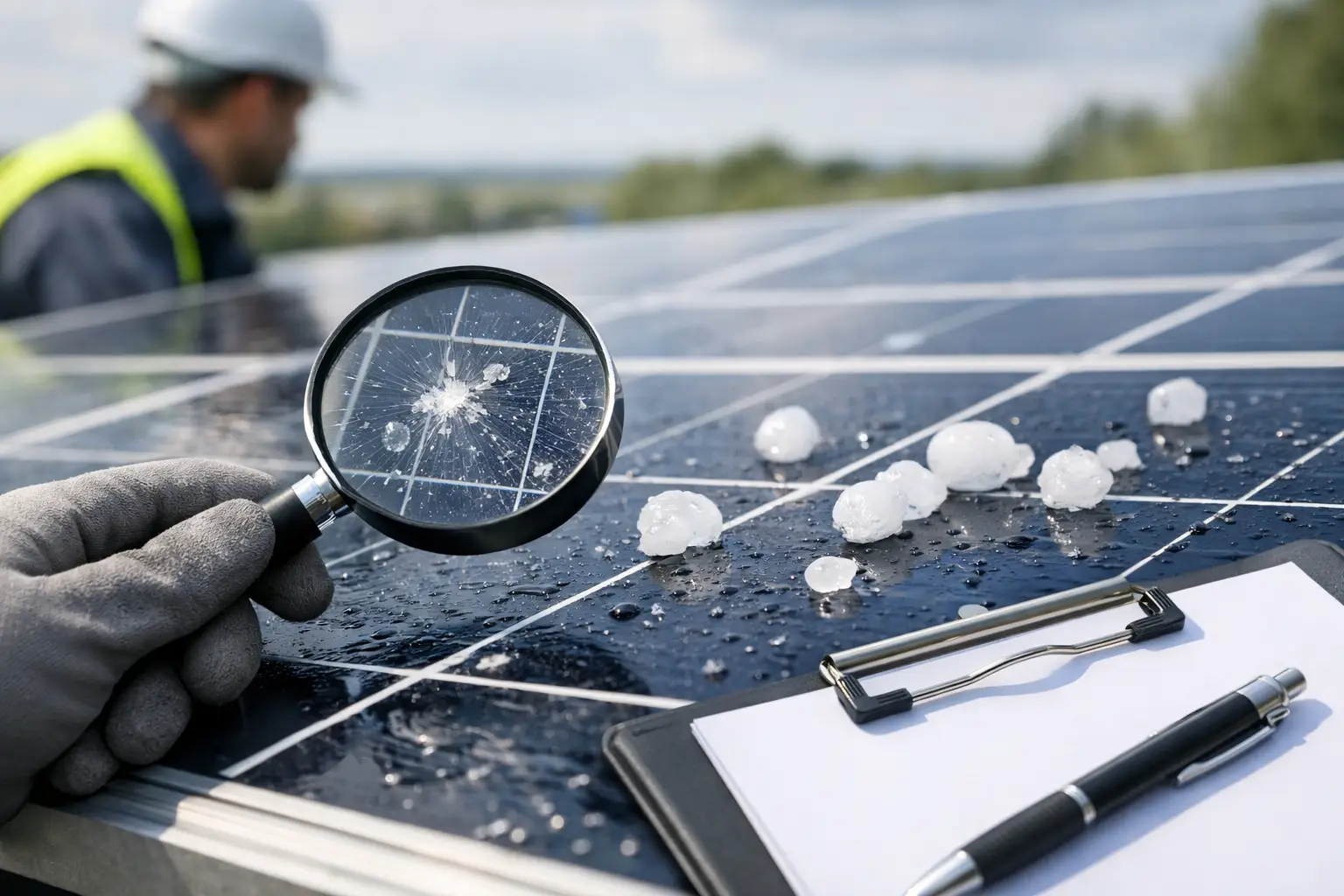
These small fractures are called microcracks. They are often invisible to the naked eye, but can disrupt the flow of current in a panel. The panel then delivers less energy, sometimes only noticeable weeks or months later. Moisture can penetrate through a damaged edge, backsheet, or junction box. This increases the chance of further damage and accelerated wear.
That is why just glancing at the panels is not enough. A good assessment combines a visual check with a check of the yield and, if necessary, a technical inspection.
Assessing panel damage after hail: start with a safe check
Wait until it is dry and view the installation from a safe place. Use binoculars if necessary or take photos from the ground. Do not touch damaged panels, cables, or connectors. Also, do not switch off components yourself if you are not sure how the installation is connected.
Pay particular attention to clear changes in the panel surface. A star-shaped crack, a broken corner, or loose glass always requires quick follow-up. Also look for unusual spots: white discoloration, dark spots, air bubbles in the foil, or a damaged edge. If panels have shifted or there is glass on the roof or ground, the mounting system may also have taken a hit.
Next, check the inverter without opening the housing. Messages on the screen, a red fault light, or an error code can indicate a problem in a string, the group of panels connected together. Note the message and take a photo. This helps a technician and your insurer to correctly assess the situation.
Compare your yield, but don’t jump to conclusions too quickly
The yield after a hailstorm often provides valuable information. Compare production with the same period last year, or with days with a similar weather pattern. Preferably look at several sunny days. One cloudy day says little, but a clear and sustained decline can be a signal.
If you have a monitoring platform, check whether all strings and panels are behaving normally. A sudden difference between two comparable roof surfaces can indicate damage. Monitoring makes hidden problems visible faster and limits unnecessary downtime. Especially when you don’t look at your inverter daily, it gives extra peace of mind.
Do take other causes of lower yield into account. Dirt, shade, an inverter malfunction, or a problem with the internet connection can give the same impression. It is therefore not just about fewer kilowatt-hours, but about the connection between the hailstorm, visible signals, and the performance of the installation.
Which signs require a professional inspection?
A professional check is wise as soon as you see damage, receive an error message, or notice an unexpected drop in yield. Even after extremely heavy hail, an inspection is useful when there is no directly visible problem. Especially with older panels or installations that haven’t been checked for a long time, this prevents uncertainty.
A technician assesses more than just the glass. They check the panels, edges, backsheets, junction boxes, connectors, cabling, and mounting on the roof. Then measurements are carried out to see if the electrical values are still correct. Where necessary, additional research can show if cells are internally damaged.
That investigation is not the same in every situation. With a visible break, the conclusion is often quickly clear. With suspected microcracks, extra diagnosis is needed. You must weigh that investment against the risk of long-term yield loss, moisture problems, and possible damage to other components. A correct judgment prevents you from unnecessarily replacing healthy panels, but also prevents damaged panels from remaining in place for too long.
Take good photos for your file and insurance
If you suspect hail damage, record the situation as quickly as possible. Take overview photos of the roof from the ground and detailed photos of visible damage, as far as it is safe to do so. Note the date and time of the hailstorm, save messages from the inverter, and take screenshots of your production data.
Then report the damage according to the terms of your insurance. Do not have repair work carried out before you have collected sufficient evidence, unless there is an acute safety risk. In that case, safety comes first. During a technical inspection, ask for a clear report with the findings, possible cause, and the advised repair. This gives you a stronger case and prevents discussion about the state of the installation.
Also check your policy. Not every insurance policy uses the same terms for solar panels, deductibles, consequential damage, or replacement. Good insurance provides security, but only if the damage is reported correctly and in a timely manner.
What do you do with a cracked or defective panel?
A panel with broken glass is not just a cosmetic problem. It can let in moisture and affect electrical safety. Therefore, have a visibly damaged panel assessed quickly. Depending on the installation, a technician may advise safely decommissioning the panel, replacing it, or performing further measurements first.
Replacement is not always as simple as placing one new panel. New panels can have different electrical properties than older models. In a string, this can affect efficiency. A specialist therefore looks at the type of installation, the age of the panels, the configuration, and the condition of the other components. Sometimes one replacement is logical. Sometimes a broader solution is economically wiser.
Also have the mounting checked. Hail usually affects the panels most, but a heavy storm is often accompanied by wind gusts. Loose clamps, shifted panels, or damaged cable routing can lead to problems later. By including everything in one inspection, you limit the chance of a second intervention.
Prevent long-term downtime after severe weather
You cannot stop hail, but you can better manage the consequences. Regular checks, maintenance, and yield monitoring ensure that deviations are noticed faster. This is especially relevant when your installer is no longer active or when you don’t have time to follow up on performance yourself.
At Solar Assistance, technicians look at more than just a visible defect. They assess what the damage means for safety, continuity, and energy yield. With technical assistance and follow-up, you get clarity on the necessary steps, without guesswork based on a quick glance from the ground.
After a heavy hailstorm, don’t let just the weather report determine whether you take action. Your installation must continue to do what it was installed for: producing reliable energy. A timely assessment gives you the certainty that hidden damage does not become a long-term loss.